Why Specialized CRM Software Matters for Venture Capital Firms
The best CRM for venture capital firms is one that combines relationship intelligence, automated data capture, AI capabilities, and flexible deal-pipeline management designed for non-linear workflows.
A venture capital CRM is a customer relationship management system designed to help investment firms manage relationships, track deal flow, and source opportunities through networks rather than traditional sales pipelines.
Unlike traditional sales CRM solutions, venture capital firms rely on networks and long-term relationships to access deals through warm intros. They also need to maintain relationships with founders, co-investors, advisors, and LPs over multiple years rather than in a single sales cycle.
As deal volume increases, firms need systems that automatically capture interactions, map relationship strength, and surface the best paths to founders, investors, and other stakeholders. The CRM should provide the full investment team with context across the investment lifecycle, from sourcing and diligence through portfolio support to future fundraising.
This guide evaluates the best CRM platforms for venture capital firms in 2026, focusing on relationship intelligence, automation, reporting, and overall operational fit.
What Features Should a Venture Capital CRM Have?
The most important capabilities include relationship intelligence to map networks and identify warm intros to LPs and investment opportunities, automated data capture to eliminate manual entry, and flexible deal-pipeline management that reflects non-linear investment processes.
A strong platform should also support the broader investment lifecycle, providing partners and the investment team with a single source of truth for relationships, interactions, investment opportunities, portfolio context, and fundraising activity.
What is the Best CRM for Venture Capital Firms?
The best CRM for venture capital firms depends on fund size, workflow complexity, and the need for relationship intelligence versus customization.
- Small to mid-sized funds: 4Degrees, Affinity (relationship intelligence and ease of use)
- Enterprise funds: DealCloud, Salesforce (customization and compliance)
- Early-stage teams: Attio, HubSpot (flexibility and lower-cost entry)
Purpose-built CRM platforms typically perform better for venture capital firms because they are designed around relationship-driven workflows that streamline decision-making, enable the investment team to manage portfolios, maintain consistent follow-up, and navigate complex deal stages with greater clarity.
These platforms are built with the key features and functionality required for venture capital operations, enabling venture capitalists and other team members to track relationships, evaluate opportunities, and move deals forward more efficiently.
Core Requirements for Venture Capital CRMs are:
Relationship Intelligence and Network Mapping
In venture capital, relationships drive access to deals. A VC CRM should map networks across the firm, score relationship strength, and identify the best paths to founders, investors, co-investors, and LPs.
This allows the investment team to find warm intros rather than relying on individual memory or asking around the firm.
Automated Data Capture and Enrichment
A VC CRM should automatically capture emails, meetings, and interactions from tools like Outlook and Gmail while enriching company and contact data from sources like Crunchbase, PitchBook, and Dealroom.
The best platforms also use workflow automations to reduce repetitive CRM administration, keep follow-up moving, and make it easier for the team to maintain reliable data without constant manual entry.
AI can add another layer by identifying useful information in unstructured notes and documents and turning it into structured, reviewable CRM data.
Deal Flow and Investment Lifecycle Management
Venture capital deal flow is non-linear. CRM platforms should support customizable pipeline stages that reflect each firm's investment process and provide visibility from initial sourcing through diligence, investment decisions, and portfolio activity.
The CRM does not need to replace specialized systems such as a cap table management platform. Instead, it should centralize the relationship, communication, company, and deal context the team needs throughout the investment lifecycle.
LP and Fundraising Management
VC firms need to maintain LP relationships, manage fundraising pipelines, and track communication with current and prospective investors across funds.
Strong investor relationship management gives fund managers a shared view of interaction history, relationship strength, follow-up, and fundraising activity, rather than leaving that context scattered across inboxes, spreadsheets, and individual team members.
AI Grounded in Firm Data
AI now belongs on the requirements list, but the key question is what data it can actually use.
A VC CRM's AI should be able to answer questions about relationships, deal flow, portfolio companies, fundraising activity, and interaction history in plain language. It should also help transform unstructured information from notes and documents into structured CRM data, while allowing users to review suggested changes before information is written to important records.
4Degrees, for example, combines several AI capabilities:
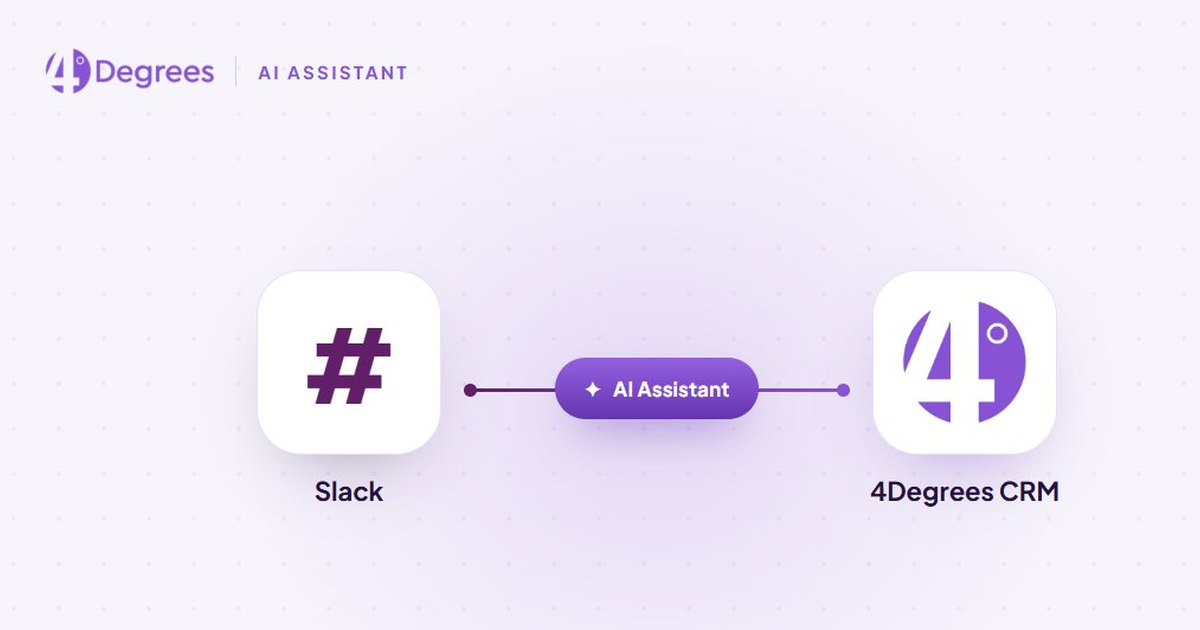
- The AI Assistant lets users ask questions about contacts, companies, relationships, deals, and pipeline activity in plain language.
- AI-enabled field enrichment can identify useful information in notes and suggest updates to the appropriate CRM fields for review.
- Document Intelligence extracts relevant company and deal information from pitch decks, CIMs, and other documents and stages it as reviewable CRM field suggestions.
- MCP lets users work with relevant 4Degrees context from ChatGPT, Claude, and Microsoft Copilot, subject to their existing CRM permissions.
When comparing platforms, firms should also determine whether AI capabilities are included in the subscription or sold through separate tiers, credits, or usage fees.
Security and Compliance
VC CRM systems must support role-based access controls, multi-factor authentication, and audit trails to protect sensitive deal and investor data.
How Much Does a Venture Capital CRM Cost?
Venture capital CRM pricing depends on platform type and level of customization.
Typical pricing ranges include:
- Purpose-built platforms: $1,500 to $8,000 per user per year
- Enterprise platforms (e.g., DealCloud): Custom pricing based on configuration
- General-purpose CRMs (e.g., Salesforce, HubSpot): Lower base cost but often higher total cost due to customization, integrations, and additional apps.
Total cost of ownership should also include implementation, data migration, training, and ongoing administration.
How Long Does It Take to Implement a VC CRM?
Implementation timelines vary based on platform complexity.
Typical timelines include:
- 1 to 3 months: Purpose-built CRMs for small-to-mid-sized firms
- 3 to 6 months: Moderate complexity deployments
- 6 to 12+ months: Enterprise platforms with heavy customization
Firms that prioritize ease of use and fast onboarding typically achieve faster adoption and earlier ROI.
The Best CRM Platforms for Venture Capital Firms in 2026
4Degrees: Purpose-Built for Relationship-Driven Deal Teams
4Degrees is a SaaS, cloud-based relationship-intelligence CRM platform designed for venture capital, private equity, and investment banking firms. Built by former investors, it focuses on turning relationship networks into actionable deal flow.
Best for:
Small-to-mid-sized venture capital firms that prioritize relationship intelligence and fast implementation.
What it does well:
- Relationship strength scoring based on email and calendar data
- Automated data capture with minimal manual entry
- Data enrichment from sources like PitchBook and Crunchbase
- Flexible deal flow management for non-linear workflows
- Built-in outreach tools for maintaining relationships at scale
- AI capabilities designed around the data and workflows already inside the CRM
4Degrees builds AI directly into the workflows used by the investment team.
The AI Assistant lets users ask questions about deals, companies, contacts, relationships, and pipeline activity in plain language. Instead of manually filtering records or building lists, teams can surface relevant CRM context by asking a question.
AI-enabled field enrichment helps keep CRM information more useful by identifying details in notes and suggesting updates to the appropriate fields for review.
Document Intelligence extracts relevant information from pitch decks, CIMs, and other documents and stages suggested CRM field updates for human review.
Through the Model Context Protocol, teams can also work with their firm's 4Degrees context from ChatGPT, Claude, and Microsoft Copilot. This can support research, meeting preparation, relationship analysis, and other work across the investment lifecycle without requiring teams to recreate the context already stored in the CRM.
These AI capabilities are included with every 4Degrees subscription without AI credits, usage fees, or usage limits.
Where it fits:
4Degrees is designed for firms that rely on networks and warm intros to source deals and maintain long-term relationships. It aligns with how venture capital teams operate without requiring extensive customization or lengthy implementation timelines.
Limitations:
For firms with highly complex workflows or specialized compliance requirements, additional configuration may be needed to align with internal processes.
Affinity: Automated Relationship Intelligence
Affinity is a relationship intelligence CRM platform designed for private capital firms, with a focus on automation and ease of use.
Best for:
Emerging managers and mid-sized venture capital firms that prioritize automation and fast onboarding.
What it does well:
- Automatic data capture from email and calendar activity
- Relationship intelligence with network mapping and scoring
- Data enrichment from multiple third-party sources
- Visual deal pipeline with customizable stages
- Pre-built reporting for sourcing and pipeline analysis
Where it fits:
Affinity is designed for firms that want to reduce manual data entry and adopt a CRM quickly without extensive configuration. It works well for teams that prioritize ease of use and automation over deep customization.
Limitations:
Less flexible for firms that require highly customized workflows or advanced reporting across complex deal processes.
DealCloud (Intapp): Enterprise-Grade Deal Management
DealCloud (Intapp) is a highly configurable CRM platform designed for institutional investment firms with complex workflows and compliance requirements.
Best for:
Large venture capital firms and multi-strategy funds that require deep customization, compliance, and investor relations capabilities.
What it does well:
- Highly configurable workflows for complex deal processes
- Dedicated modules for LP management and fundraising
- Portfolio monitoring and reporting tools
- Enterprise-grade security, compliance, and audit controls
- Deep integration with financial data providers and internal systems
Where it fits:
DealCloud is built for firms with complex operational requirements and the resources to support customization and ongoing administration.
Limitations:
Longer implementation timelines and higher total cost of ownership compared to purpose-built or lighter-weight platforms.
Salesforce: Customizable Enterprise Platform
Salesforce is a general-purpose CRM platform that can be adapted for venture capital through customization and third-party integrations.
Best for:
Venture capital firms with existing Salesforce infrastructure or those requiring deep integration with enterprise systems.
What it does well:
- Extensive customization across objects, fields, and workflows
- Large ecosystem of third-party applications via AppExchange
- Advanced reporting and analytics capabilities
- Enterprise-grade security and compliance features
- Broad integration with internal tools and external systems
Where it fits:
Salesforce is best suited for firms with technical resources capable of managing customization and ongoing administration. It offers flexibility but typically requires longer implementation timelines and a higher total cost of ownership.
Limitations:
Requires significant setup, customization, and ongoing maintenance to support venture capital workflows effectively.
HubSpot: Marketing-Centric CRM
HubSpot is a general-purpose CRM platform with strong marketing and outreach capabilities.
Best for:
Early-stage venture capital firms and emerging managers prioritize ease of use and low-cost entry.
What it does well:
- Built-in marketing automation for email campaigns and outreach
- Simple pipeline management with visual deal tracking
- Pre-built reporting and dashboards
- Free and low-cost entry points for smaller teams
- Wide range of integrations with common business tools
Where it fits:
HubSpot is a practical option for firms that prioritize marketing and outreach over relationship intelligence. It works best for smaller teams but may require workarounds for more complex VC workflows.
Limitations:
Lacks native relationship intelligence and VC-specific features needed for managing complex deal flow and investor relationships.
Attio: Modern, Flexible CRM
Attio is a flexible, modern CRM platform designed for teams that want to build custom workflows and data models.
Best for:
Small, tech-savvy venture capital teams that prioritize flexibility and customization.
What it does well:
- Highly customizable data model for relationships and deals
- Real-time collaboration and activity tracking
- Flexible integrations via API and modern tooling
- Clean, modern interface with fast implementation
- Adaptable structure for unique workflows
Where it fits:
Attio is best suited for teams comfortable designing their own systems and processes. It offers flexibility but requires more setup compared to purpose-built VC platforms.
Limitations:
Requires manual configuration and lacks pre-built workflows for venture capital use cases.
Choosing the right CRM often comes down to how each platform fits your workflow. We’ve broken down the key differences in our comparisons of 4Degrees vs Affinity, Salesforce, and DealCloud, including implementation, flexibility, and long-term scalability.
Feature Comparison: What to Prioritize Based on Fund Size and Strategy
Small Funds and Emerging Managers (1 to 10 people)
Priorities:
Ease of use, low setup time, affordability, and automated data capture
Recommended platforms:
4Degrees, Affinity, Attio, HubSpot
Small funds benefit from platforms that reduce administrative overhead and help maximize relationship-driven deal sourcing with limited resources.
Mid-Sized Funds (10 to 50 people)
Priorities:
Relationship intelligence, customizable workflows, reporting, and scalability
Recommended platforms:
4Degrees, Affinity, DealCloud
Mid-sized funds need a balance between ease of use and customization as deal flow, team collaboration, and reporting requirements become more complex.
Large Institutional Funds (50+ people)
Priorities:
Security, compliance, investor relations, and system integrations
Recommended platforms:
DealCloud, Salesforce
Large funds benefit from enterprise platforms that support complex workflows, regulatory requirements, and deep integration with existing systems.
How to Evaluate and Select a Venture Capital CRM
Step 1: Define Your Requirements
Start by documenting your firm’s needs:
- Team structure: Partners, analysts, operations
- Deal volume: Active deals and portfolio companies
- Data sources: PitchBook, Crunchbase, Dealroom
- Existing tools: Email, calendar, communication systems
- Compliance needs: Security and regulatory requirements
Step 2: Prioritize Core Features
Focus on the capabilities that matter most for venture capital:
- Relationship intelligence for mapping networks and warm intros
- Automated data capture from email and calendar activity
- AI that can answer questions from firm data and reduce CRM maintenance
- Data enrichment from third-party sources
- Customizable deal pipelines for non-linear workflows
- Workflow automations for repetitive processes and follow-up
- Reporting and analytics to track key metrics and pipeline visibility
- Investor relationship management for fundraising and LP relationships
- Security and compliance controls
Step 3: Evaluate the AI
Do not evaluate a platform's AI based only on whether it has an AI assistant.
Test whether the AI can:
- Answer questions using your firm's actual CRM context
- Understand contacts, relationships, companies, and deal activity
- Extract useful information from pitch decks and other documents
- Turn unstructured notes into structured CRM field suggestions
- Work with the AI assistants your team already uses
- Respect existing permissions and data access controls
Also determine whether these capabilities are included with the subscription or require separate AI tiers, credits, or usage fees.
Step 4: Evaluate Total Cost and Implementation
Consider both upfront and ongoing investment:
- Licensing and per-user pricing
- Implementation and onboarding effort
- Data migration from existing systems
- Training and adoption requirements
- Ongoing administration and support
- Additional AI fees, credits, or premium tiers
Step 4: Request Demos and Test the Product
Evaluate platforms in real scenarios:
- User experience: Is it intuitive for the full team?
- Data quality: Does enrichment populate accurate data?
- Relationship intelligence: Can it surface meaningful connections?
- Support: What onboarding and training are included?
Step 5: Request Demos and Test the Product
Evaluate platforms in real scenarios:
- User experience: Is it intuitive for the full investment team?
- Data quality: Does enrichment populate accurate data?
- Relationship intelligence: Can it surface meaningful connections and warm intros?
- AI: Can it answer useful questions from your data and reduce actual work?
- Fundraising: Can fund managers maintain useful context across LP relationships?
- Support: What onboarding and training are included?
Common Mistakes When Choosing a Venture Capital CRM
The most common mistakes include:
Mistake 1: Choosing a Generic Sales CRM
Generic CRMs like Pipedrive or HubSpot are built for transactional sales, not relationship-driven dealmaking. They often lack relationship intelligence, data enrichment, and VC-specific workflows, relying instead on basic contact management and generic sales-focused templates that do not reflect how venture capital firms operate.
Mistake 2: Underestimating Implementation Complexity
Highly customizable platforms can take significantly longer to implement than expected, delaying adoption and slowing down deal execution.
Mistake 3: Ignoring User Adoption
CRM success depends on consistent usage across the team. Platforms that require heavy manual entry or have poor usability often fail to gain adoption.
Mistake 4: Failing to Plan for Data Migration
Data migration is often underestimated. Cleaning and structuring data from spreadsheets or legacy systems can become a major bottleneck during implementation.
ROI and Business Impact of Venture Capital CRMs
Time Savings and Productivity
Automated data capture and enrichment reduce manual work, allowing teams to focus more on deal evaluation, relationship building, and portfolio support.
Improved Deal Sourcing
Relationship intelligence helps firms identify warm introduction paths, increase engagement with founders, and build a more consistent pipeline of opportunities.
Stronger Fundraising Outcomes
Tracking relationships and investor pipelines in a structured system improves visibility and increases the likelihood of securing commitments.
Enhanced Investor Relations
CRM platforms centralize LP communication, track engagement history, and support more consistent and personalized investor updates.
Conclusion: Selecting the Right CRM for Your Venture Capital Firm
The best CRM for venture capital firms depends on fund size, investment strategy, and operational priorities.
- Small-to-mid-sized funds: Platforms like 4Degrees and Affinity are well-suited for teams that prioritize relationship intelligence, fast implementation, and ease of use.
- Emerging managers: Affinity, Attio, and HubSpot offer accessible options with lower setup requirements and flexible workflows.
- Large institutional funds: DealCloud and Salesforce provide the customization, compliance, and investor management capabilities required at scale, with longer implementation timelines and higher total cost of ownership.
Successful CRM adoption depends on more than selecting the right platform. Firms need clear requirements, strong internal ownership, structured data migration, and consistent usage across the team.
The most effective venture capital firms treat their CRM as a system for managing relationships and deal flow, not just a database.
For firms evaluating CRM platforms for other private markets verticals, see our guides to the best CRM for private equity in 2026, the best CRM for investment banking in 2026, and the best CRM for M&A in 2026.
Why Specialized CRM Software Matters for Venture Capital Firms
The best CRM for venture capital firms is one that combines relationship intelligence, automated data capture, and flexible deal-pipeline management, designed for non-linear workflows.
A venture capital CRM is a customer relationship management system designed to help investment firms manage relationships, track deal flow, and source opportunities through networks rather than traditional sales pipelines.
Unlike traditional sales CRM solutions, venture capital firms rely on networks and long-term relationships to access deals through warm introductions.
As deal volume increases, firms need systems that automatically capture interactions, map relationship strength, and surface the best paths to founders, investors, and other stakeholders.
Platforms like 4Degrees, Affinity, and DealCloud lead in this category based on fund size and operational complexity.
This guide evaluates the best CRM platforms for venture capital firms in 2026, focusing on relationship intelligence, automation, reporting, and overall operational fit.
What Features Should a Venture Capital CRM Have?
The most important capabilities include relationship intelligence to map networks and identify warm-introduction paths to LPs and investment opportunities, automated data capture to eliminate manual entry, and flexible deal-pipeline management that reflects non-linear investment processes. These systems also serve as a centralized source of truth for all relationships, interactions, and investment opportunities across the firm.
What is the Best CRM for Venture Capital Firms?
The best CRM for venture capital firms depends on fund size, workflow complexity, and the need for relationship intelligence versus customization.
- Small to mid-sized funds: 4Degrees, Affinity (relationship intelligence and ease of use)
- Enterprise funds: DealCloud, Salesforce (customization and compliance)
- Early-stage teams: Attio, HubSpot (flexibility and lower-cost entry)
Purpose-built CRM platforms typically perform better for venture capital firms because they are designed around relationship-driven workflows that streamline decision-making, enable teams to manage portfolios, maintain consistent follow-up, and navigate complex deal stages with greater clarity.
These platforms are built with the key features and functionality required for venture capital operations, enabling venture capitalists and other team members to track relationships, evaluate opportunities, and move deals forward more efficiently.
Core Requirements for Venture Capital CRMs are:
Relationship Intelligence and Network Mapping
In venture capital, relationships drive access to deals. A VC CRM should map networks across the firm, score relationship strength, and identify the best paths to founders, investors, and co-investors, supporting both sourcing and due diligence efforts.
Automated Data Capture and Enrichment
A VC CRM should automatically capture emails, meetings, and interactions from tools like Outlook and Gmail, while enriching company and contact data from sources like Crunchbase, PitchBook, and Dealroom. This reduces manual entry and eliminates reliance on fragmented tools like Microsoft Excel.
Deal Flow Pipeline Management
Venture capital deal flow is non-linear. CRM platforms must support customizable pipeline stages that reflect each firm’s investment process, enable data-driven decision-making with modern collaboration tools across teams, and improve visibility across portfolio management and active deals.
LP and Fundraising Management
VC firms need to manage relationships with limited partners, track fundraising pipelines, and maintain consistent communication with investors across funds.
AI Grounded in Firm Data
AI belongs on the requirements list, and the test is whether it works from your firm's own data. A VC CRM's AI should be able to answer questions about relationships, pipeline, and interaction history in plain language; extract key details from pitch decks and CIMs into CRM fields with human review; and connect assistants such as ChatGPT and Claude to firm context through the Model Context Protocol. Confirm if these capabilities are included with the subscription or sold as separate tiers, credits, or add-ons.
Security and Compliance
VC CRM systems must support role-based access controls, multi-factor authentication, and audit trails to protect sensitive deal and investor data.
How Much Does a Venture Capital CRM Cost?
Venture capital CRM pricing depends on platform type and level of customization.
Typical pricing ranges include:
- Purpose-built platforms: $1,500 to $8,000 per user per year
- Enterprise platforms (e.g., DealCloud): Custom pricing based on configuration
- General-purpose CRMs (e.g., Salesforce, HubSpot): Lower base cost but often higher total cost due to customization, integrations, and additional apps.
Total cost of ownership should also include implementation, data migration, training, and ongoing administration.
How Long Does It Take to Implement a VC CRM?
Implementation timelines vary based on platform complexity.
Typical timelines include:
- 1 to 3 months: Purpose-built CRMs for small-to-mid-sized firms
- 3 to 6 months: Moderate complexity deployments
- 6 to 12+ months: Enterprise platforms with heavy customization
Firms that prioritize ease of use and fast onboarding typically achieve faster adoption and earlier ROI.
The Best CRM Platforms for Venture Capital Firms in 2026
4Degrees: Purpose-Built for Relationship-Driven Deal Teams
4Degrees is a SaaS, cloud-based relationship-intelligence CRM platform designed for venture capital, private equity, and investment banking firms. Built by former investors, it focuses on turning relationship networks into actionable deal flow.
Best for:
Small-to-mid-sized venture capital firms that prioritize relationship intelligence and fast implementation.
What it does well:
- Relationship strength scoring based on email and calendar data
- Automated data capture with minimal manual entry
- Data enrichment from sources like PitchBook and Crunchbase
- Flexible deal flow management for non-linear workflows
- Built-in outreach tools for maintaining relationships at scale
4Degrees also builds its current AI lineup into the platform. The AI Assistant answers questions about deals, relationships, and pipeline activity in plain language, replacing the list-building a team would otherwise do by hand. Document Intelligence extracts fields from pitch decks, CIMs, and other documents and stages them in the CRM as suggestions for your team to review before saving. And through support for the Model Context Protocol (MCP), 4Degrees works with tools like ChatGPT and Claude to combine your firm's internal data with external information, generating grounded outputs in real time.
Where it fits:
4Degrees is designed for firms that rely on networks and warm introductions to source deals. It aligns with how venture capital teams operate without requiring extensive customization or long implementation timelines.
Limitations:
For firms with highly complex workflows or specialized compliance requirements, additional configuration may be needed to align with internal processes.
Affinity: Automated Relationship Intelligence
Affinity is a relationship intelligence CRM platform designed for private capital firms, with a focus on automation and ease of use.
Best for:
Emerging managers and mid-sized venture capital firms that prioritize automation and fast onboarding.
What it does well:
- Automatic data capture from email and calendar activity
- Relationship intelligence with network mapping and scoring
- Data enrichment from multiple third-party sources
- Visual deal pipeline with customizable stages
- Pre-built reporting for sourcing and pipeline analysis
Where it fits:
Affinity is designed for firms that want to reduce manual data entry and adopt a CRM quickly without extensive configuration. It works well for teams that prioritize ease of use and automation over deep customization.
Limitations:
Less flexible for firms that require highly customized workflows or advanced reporting across complex deal processes.
DealCloud (Intapp): Enterprise-Grade Deal Management
DealCloud (Intapp) is a highly configurable CRM platform designed for institutional investment firms with complex workflows and compliance requirements.
Best for:
Large venture capital firms and multi-strategy funds that require deep customization, compliance, and investor relations capabilities.
What it does well:
- Highly configurable workflows for complex deal processes
- Dedicated modules for LP management and fundraising
- Portfolio monitoring and reporting tools
- Enterprise-grade security, compliance, and audit controls
- Deep integration with financial data providers and internal systems
Where it fits:
DealCloud is built for firms with complex operational requirements and the resources to support customization and ongoing administration.
Limitations:
Longer implementation timelines and higher total cost of ownership compared to purpose-built or lighter-weight platforms.
Salesforce: Customizable Enterprise Platform
Salesforce is a general-purpose CRM platform that can be adapted for venture capital through customization and third-party integrations.
Best for:
Venture capital firms with existing Salesforce infrastructure or those requiring deep integration with enterprise systems.
What it does well:
- Extensive customization across objects, fields, and workflows
- Large ecosystem of third-party applications via AppExchange
- Advanced reporting and analytics capabilities
- Enterprise-grade security and compliance features
- Broad integration with internal tools and external systems
Where it fits:
Salesforce is best suited for firms with technical resources capable of managing customization and ongoing administration. It offers flexibility but typically requires longer implementation timelines and a higher total cost of ownership.
Limitations:
Requires significant setup, customization, and ongoing maintenance to support venture capital workflows effectively.
HubSpot: Marketing-Centric CRM
HubSpot is a general-purpose CRM platform with strong marketing and outreach capabilities.
Best for:
Early-stage venture capital firms and emerging managers prioritize ease of use and low-cost entry.
What it does well:
- Built-in marketing automation for email campaigns and outreach
- Simple pipeline management with visual deal tracking
- Pre-built reporting and dashboards
- Free and low-cost entry points for smaller teams
- Wide range of integrations with common business tools
Where it fits:
HubSpot is a practical option for firms that prioritize marketing and outreach over relationship intelligence. It works best for smaller teams but may require workarounds for more complex VC workflows.
Limitations:
Lacks native relationship intelligence and VC-specific features needed for managing complex deal flow and investor relationships.
Attio: Modern, Flexible CRM
Attio is a flexible, modern CRM platform designed for teams that want to build custom workflows and data models.
Best for:
Small, tech-savvy venture capital teams that prioritize flexibility and customization.
What it does well:
- Highly customizable data model for relationships and deals
- Real-time collaboration and activity tracking
- Flexible integrations via API and modern tooling
- Clean, modern interface with fast implementation
- Adaptable structure for unique workflows
Where it fits:
Attio is best suited for teams comfortable designing their own systems and processes. It offers flexibility but requires more setup compared to purpose-built VC platforms.
Limitations:
Requires manual configuration and lacks pre-built workflows for venture capital use cases.
Choosing the right CRM often comes down to how each platform fits your workflow. We’ve broken down the key differences in our comparisons of 4Degrees vs Affinity, Salesforce, and DealCloud, including implementation, flexibility, and long-term scalability.
Feature Comparison: What to Prioritize Based on Fund Size and Strategy
Small Funds and Emerging Managers (1 to 10 people)
Priorities:
Ease of use, low setup time, affordability, and automated data capture
Recommended platforms:
4Degrees, Affinity, Attio, HubSpot
Small funds benefit from platforms that reduce administrative overhead and help maximize relationship-driven deal sourcing with limited resources.
Mid-Sized Funds (10 to 50 people)
Priorities:
Relationship intelligence, customizable workflows, reporting, and scalability
Recommended platforms:
4Degrees, Affinity, DealCloud
Mid-sized funds need a balance between ease of use and customization as deal flow, team collaboration, and reporting requirements become more complex.
Large Institutional Funds (50+ people)
Priorities:
Security, compliance, investor relations, and system integrations
Recommended platforms:
DealCloud, Salesforce
Large funds benefit from enterprise platforms that support complex workflows, regulatory requirements, and deep integration with existing systems.
How to Evaluate and Select a Venture Capital CRM
Step 1: Define Your Requirements
Start by documenting your firm’s needs:
- Team structure: Partners, analysts, operations
- Deal volume: Active deals and portfolio companies
- Data sources: PitchBook, Crunchbase, Dealroom
- Existing tools: Email, calendar, communication systems
- Compliance needs: Security and regulatory requirements
Step 2: Prioritize Core Features
Focus on the capabilities that matter most for venture capital:
- Relationship intelligence for mapping networks and introductions
- Automated data capture from email and calendar activity
- Data enrichment from third-party sources
- Customizable deal pipelines for non-linear workflows
- Reporting and analytics to track key metrics and pipeline visibility
- Security and compliance controls
Step 3: Evaluate Total Cost and Implementation
Consider both upfront and ongoing investment:
- Licensing and per-user pricing
- Implementation and onboarding effort
- Data migration from existing systems
- Training and adoption requirements
- Ongoing administration and support
Step 4: Request Demos and Test the Product
Evaluate platforms in real scenarios:
- User experience: Is it intuitive for the full team?
- Data quality: Does enrichment populate accurate data?
- Relationship intelligence: Can it surface meaningful connections?
- Support: What onboarding and training are included?
Step 5: Validate Security and Compliance
Confirm the platform meets your standards:
- Data encryption (at rest and in transit)
- Role-based access, SSO (single sign-on), and multi-factor authentication
- Data backup and compliance requirements
Common Mistakes When Choosing a Venture Capital CRM
The most common mistakes include:
Mistake 1: Choosing a Generic Sales CRM
Generic CRMs like Pipedrive or HubSpot are built for transactional sales, not relationship-driven dealmaking. They often lack relationship intelligence, data enrichment, and VC-specific workflows, relying instead on basic contact management and generic sales-focused templates that do not reflect how venture capital firms operate.
Mistake 2: Underestimating Implementation Complexity
Highly customizable platforms can take significantly longer to implement than expected, delaying adoption and slowing down deal execution.
Mistake 3: Ignoring User Adoption
CRM success depends on consistent usage across the team. Platforms that require heavy manual entry or have poor usability often fail to gain adoption.
Mistake 4: Failing to Plan for Data Migration
Data migration is often underestimated. Cleaning and structuring data from spreadsheets or legacy systems can become a major bottleneck during implementation.
ROI and Business Impact of Venture Capital CRMs
Time Savings and Productivity
Automated data capture and enrichment reduce manual work, allowing teams to focus more on deal evaluation, relationship building, and portfolio support.
Improved Deal Sourcing
Relationship intelligence helps firms identify warm introduction paths, increase engagement with founders, and build a more consistent pipeline of opportunities.
Stronger Fundraising Outcomes
Tracking relationships and investor pipelines in a structured system improves visibility and increases the likelihood of securing commitments.
Enhanced Investor Relations
CRM platforms centralize LP communication, track engagement history, and support more consistent and personalized investor updates.
Conclusion: Selecting the Right CRM for Your Venture Capital Firm
The best CRM for venture capital firms depends on fund size, investment strategy, and operational priorities.
- Small-to-mid-sized funds: Platforms like 4Degrees and Affinity are well-suited for teams that prioritize relationship intelligence, fast implementation, and ease of use.
- Emerging managers: Affinity, Attio, and HubSpot offer accessible options with lower setup requirements and flexible workflows.
- Large institutional funds: DealCloud and Salesforce provide the customization, compliance, and investor management capabilities required at scale, with longer implementation timelines and higher total cost of ownership.
Successful CRM adoption depends on more than selecting the right platform. Firms need clear requirements, strong internal ownership, structured data migration, and consistent usage across the team.
The most effective venture capital firms treat their CRM as a system for managing relationships and deal flow, not just a database.