

Investment banking is a relationship business. Winning mandates depend on who you know, how well you stay in touch, and how quickly you move when an opportunity surfaces. But managing those relationships through personal networks and informal processes doesn’t scale.
Many investment banking teams still rely on spreadsheets, Outlook, and tribal knowledge to manage deal activity. Contact data sits in individual inboxes, buyer lists get rebuilt for every new mandate, and coverage gaps often go unnoticed until a competitor wins the deal. These manual processes slow execution and make it harder for teams to operate from a shared view of the business.
An investment banking CRM solves these problems by centralizing deal data, automating interaction logging, and giving teams visibility into relationships, mandates, and pipeline status.
This guide reviews the leading CRM platforms used by investment banking teams in 2026, what to look for in a system, how vendors compare, and which platforms fit different firm sizes and workflows. Let’s get started.
What to Look for in an Investment Banking CRM
Investment banking workflows are fundamentally different from transactional sales. A mandate can take months to win and months more to execute. Relationships can span decades, and the data your team generates through emails, meetings, pitch materials, and buyer feedback becomes institutional knowledge. Without the right investment banking CRM tool, much of that knowledge can disappear when a banker leaves.
These are the criteria that matter when evaluating an investment banking CRM.
Automated Data Capture
Investment bankers generate a high volume of activity across coverage, origination, and execution. If a CRM depends on manual data entry, adoption will fail. Bankers will not take the time to manually log emails, meetings, or follow-ups.
Look for an investment banking CRM that captures activity automatically from Outlook, Microsoft Exchange, and Gmail, then builds a shared history of client interactions and client data without requiring bankers to open the CRM.
Relationship Intelligence
Coverage is relationship-driven. Knowing who at your firm has the strongest connection to a CEO, CFO, sponsor, or buyer can determine whether business development starts with a warm introduction or cold outreach.
The best platforms analyze the strength and recency of connections across your firm’s ecosystem, surface warm introduction paths, flag when important client relationships have gone quiet, and, in some cases, incorporate LinkedIn signals to enrich relationship context. For firms competing for high-value mandates, relationship intelligence is core to decision-making.
Deal Pipeline Management
An investment banking deal does not move through a standard sales funnel. Firms manage concurrent buy-side and sell-side processes, each with different milestones, stakeholders, and paths through the deal lifecycle.
The right deal pipeline should support flexible pipeline management that mirrors how your firm executes mandates, from pitch and engagement letter through buyer outreach, diligence, and close. It should help track deals, support multiple concurrent processes, and reflect advisory workflows rather than generic sales stages.
Reporting and Analytics
Managing directors need real-time visibility into pipeline health, coverage activity, and team performance without exporting data into spreadsheets. Answers to Monday morning pipeline questions should already be available through dashboards, metrics, and built-in reporting.
Look for advanced analytics that support data-driven decisions around origination attribution, deal execution, buyer engagement, and coverage gaps. The best platforms surface client insights, strengthen visibility into deal flow, and make reporting part of daily workflows.
Integrations
Your investment banking CRM should fit into the broader technology stack your firm already uses, including Outlook, Gmail, data providers such as PitchBook and Capital IQ, virtual data rooms, document management systems, and, where relevant, platforms like Salesforce.
Strong integrations support automation and connect internal relationship data with market data. Native integrations usually outperform bolt-on connectors, which add a maintenance burden.
AI Capabilities
AI capabilities have joined the core evaluation criteria. In advisory work, the practical tests are whether AI can answer questions from your firm's own coverage and mandate history, extract key terms from CIMs, teasers, and buyer materials into CRM fields, and connect tools like ChatGPT and Claude to live deal context for pitch preparation and buyer research.
Confirm how AI is packaged as well: some vendors include it in every subscription while others sell it as credits, higher tiers, or add-on modules.
Implementation and Support
A purpose-built investment banking CRM software should not take six months to deploy or require a dedicated administrator to maintain.
The right platform should support faster onboarding, predefined structures for advisory workflows, and support teams that understand how bankers work. In financial services, this includes attention to sensitive data and regulatory compliance.
DealCloud
Overview
DealCloud is a cloud-based CRM built for capital markets firms and widely used by investment banks, private equity firms, and other financial services organizations. It supports business development, deal flow, and deal execution through configurable deal pipeline management, reporting, and workflow tools designed for complex advisory environments.
For larger firms managing multiple products, teams, and geographies, its depth and flexibility are often part of the appeal.
One of DealCloud's strengths is customization. Firms can tailor fields, workflows, permissions, dashboards, and reporting to match internal processes. That flexibility comes with tradeoffs: implementations can take months, and ongoing changes are often handled by the vendor's services team, adding cost and dependency.
DealCloud also differs from newer AI-powered and relationship-intelligence platforms in how it maintains data. It does not natively provide automated relationship intelligence, which means teams often rely more heavily on manual data entry and banker discipline to keep client data current and interaction history complete. For firms prioritizing automation and relationship visibility, that can be a limitation.
Pros
- Purpose-built for capital markets, with structures designed for advisory workflows
- Highly customizable dashboards, reporting, and pipeline management views
- Strong enterprise footprint among large investment banks and bulge bracket institutions
- Broad integration ecosystem across data providers and other financial systems
Cons
- Steep learning curve and a complex interface that can discourage adoption, particularly among senior bankers
- Deployment timelines often run 3 to 6 months or longer, with significant configuration required
- Ongoing customization may require vendor professional services, adding a recurring cost
- Relies more heavily on manual data entry than platforms with automated capture, which can affect adoption
- Expensive relative to other options, especially when implementation and customization fees are included
Pricing: Enterprise pricing. Contact Intapp for details. Expect significant implementation fees in addition to per-user subscription costs.
Navatar
Overview
Navatar is a Salesforce-based CRM designed for private markets firms, including investment banking firms, mergers and acquisitions advisors, and private equity teams.
Navatar was one of the first purpose-built platforms for deal-driven financial services and reports more than 600 clients across 35 countries. Its focus has long been helping firms manage deal flow, client relationships, and advisory workflows in a system built for how deal teams operate.
Because Navatar runs on Salesforce, firms gain access to the AppExchange ecosystem and enterprise security controls while adding industry-specific deal and pipeline management workflows on top. The platform recently introduced an AI-powered Deal Engine for origination, buyer and sponsor research, and deal execution through Salesforce Agentforce and Microsoft Copilot.
For firms already standardized on Salesforce, Navatar can be easier to adopt than migrating to a separate platform.
But firms unfamiliar with Salesforce should still consider the administrative, configuration, and adoption overhead that often accompanies Salesforce-based products, particularly for leaner advisory teams without dedicated CRM support.
Pros
- Built on Salesforce, providing access to the AppExchange ecosystem and enterprise-grade security
- AI Deal Engine supports origination, coverage management, and buyer list generation
- Long track record with 600+ clients globally, including large advisory firms
- Supports both M&A advisory and investor relations workflows in one platform
- Embedded AI works inside Outlook and Slack, reducing the need to log into the CRM directly
Cons
- Requires a Salesforce license in addition to the Navatar subscription, increasing the total cost
- Salesforce-based interface can feel complex for smaller teams or firms without dedicated CRM administration
- Customization, while possible, often requires Salesforce consulting expertise
- Pricing is not publicly available and is reportedly at the higher end of the market
Pricing: Contact Navatar for pricing. Requires a separate Salesforce license.
Salesforce
Overview
Salesforce is the largest and most widely used CRM solution globally. It enables companies across industries to manage customer relationship management, but it was originally designed for transactional sales teams moving prospects through a pipeline, not for mandate-driven advisory workflows.
For many investment banking firms, Salesforce can be too broad out of the box. Firms may pay for functionality they do not need, such as marketing automation or customer support modules, while still requiring significant customization to support deal management, pipeline management, and deal execution. That customization often depends on outside consultants or Salesforce partners, adding cost, complexity, and deployment time.
For firms already on Salesforce with internal administrators in place, layering an investment banking solution, such as Navatar or 4Degrees, on top can be a practical approach. The AppExchange ecosystem remains a major advantage for firms with complex technology stacks.
Pros
- Highly customizable, with the largest third-party app ecosystem through AppExchange
- Scalable from small teams to global institutions
- Strong integration capabilities with virtually any data providers or tools
- Can be paired with IB-specific overlays such as Navatar or 4Degrees for relationship intelligence
Cons
- Customization for investment banking workflows often requires expensive consulting expertise and long deployment timelines
- Support teams are generally not specialized in mandate-driven advisory processes
- Substantial training is often required for users to be productive
- Relies heavily on manual data entry unless paired with third-party automation tools
- Total cost of ownership, including licensing, customization, administration, and training, is often higher than purpose-built alternatives
Pricing: The total pricing varies by edition. Enterprise plans start around $165 per user per month. The total cost of ownership for investment banking use cases is often significantly higher once customization and ongoing administration are included.
4Degrees
Overview
4Degrees is an all-in-one relationship intelligence CRM platform built by ex-investors for private markets firms, including investment banking firms, private equity, venture capital, and M&A. The platform combines deal management, relationship management, automated data capture, reporting, and pipeline management in a system designed for how deal teams work.
It syncs with Microsoft Exchange, Outlook, and Gmail to automatically capture interactions, enriches contact and company records through data providers such as PitchBook, and gives teams shared visibility into mandates, coverage activity, and deal progress. Relationship intelligence helps surface warm-introduction paths and identify the strongest connections to relevant executives, sponsors, or buyers across the firm’s network, supporting business development, client engagement, and better decision-making.
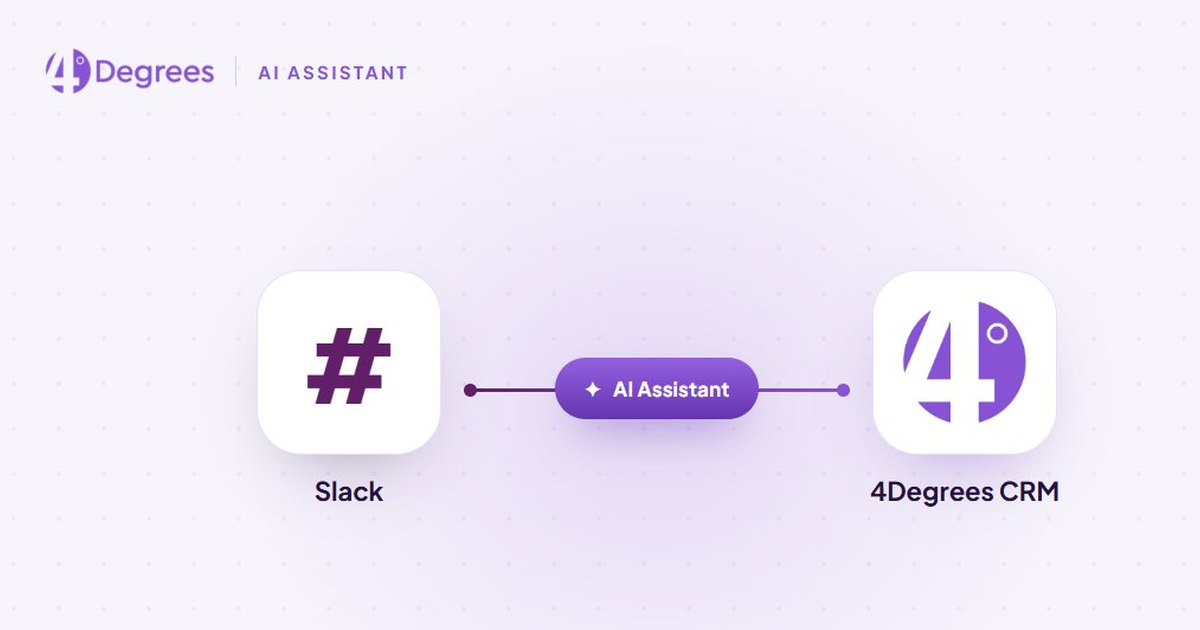
4Degrees also includes AI built for banker workflows, all included in every subscription with no usage fees. Document Intelligence extracts key details from CIMs, teasers, and banker decks into CRM fields as reviewable suggestions, so mandate records stay current without manual entry. The AI Assistant answers plain-language questions about coverage, mandates, and relationships, in the product and in Slack. And 4Degrees MCPconnects ChatGPT and Claude to the firm's actual deal and relationship context for pitch preparation and buyer research.
Combined with real-time reporting, dashboards, and automation, the platform helps bankers reduce manual work and move faster across the deal lifecycle.
Pros
- Relationship intelligence built specifically for private markets, surfacing warm introduction paths and connection strength across coverage responsibilities
- Automated data capture from Gmail and Microsoft Exchange, reducing manual data entry for bankers
- Native PitchBook integration for enriched contact and company client data
- AI capabilities for structured document extraction, plain-language questions, and connected workflows through MCP
- Built by ex-investors who understand advisory workflows, which can shorten implementation and reduce the education burden on your firm
Cons
- As a platform focused on private markets, 4Degrees is not the right fit for teams outside of deal-driven financial services
- Relationship intelligence delivers the most value when adopted across the full deal team, not just a subset of users
Pricing: 4Degrees starts at an accessible price point for small teams, with plans that scale for enterprise firms. See 4Degrees pricing for details
See how 4Degrees compares to other CRMs used by investment banking teams:
Affinity
Overview
Affinity is a deal management and CRM platform built for deal-driven firms to automate data entry, manage client relationships, and track deal flow. Using proprietary technology, the platform helps teams better understand their network, source new opportunities, and support business development through stronger visibility into relationship activity.
Affinity automatically captures activity from Gmail and Outlook, logging interactions into contact and deal records without requiring extensive manual data entry. It also provides relationship analytics and network mapping to help teams understand connection strength, identify introduction paths, and support relationship intelligence across the firm.
While Affinity is a strong platform, one limitation for some investment bankers is the relative lack of real-time network alerts tied to signals such as job changes, investments, deal announcements, or sector activity. For firms that use these signals to prioritize outreach and stay engaged with key relationships, that can be a meaningful gap.
Pros
- Automated data capture from Gmail and Outlook, reducing manual data entry
- Relationship analytics that map connection strength across the team’s network
- Customizable support for different deal workflows and team structures
- Clean, modern interface that can encourage adoption
Cons
- Lacks real-time network alerts for job changes, investments, and other engagement signals
- Integration with some third-party tools used by investment banking firms may require workarounds or additional tools
- Pricing is at the higher end relative to comparable platforms, which may be a barrier for smaller advisory teams
- Broad feature coverage across industries means some IB-specific workflow needs may require adaptation
Pricing: Contact Affinity for pricing. Reported at approximately $2,000 per user per year for CRM plans.
MadeMarket
Overview
MadeMarket is a CRM and deal management platform built for investment bankers by investment bankers. The platform supports the full mandate lifecycle, including business development, contact management, deal execution, buyer list distribution, and reporting. It is designed specifically for buy-side and sell-side advisory workflows, including M&A, financing transactions, and corporate development.
MadeMarket emphasizes speed and usability. The company claims that firms can update tracking logs 12x faster, build buyer lists 10x faster, and send process emails such as NDAs and teasers 20x faster than spreadsheets. The platform includes Outlook integration for activity capture, a Chrome extension for Gmail, and built-in integrations with data providers and tools such as PitchBook, Capital IQ, Crunchbase, CapLinked, and Salesforce.
MadeMarket also includes a Relationship IQ feature that analyzes firmwide communication and deal history to identify the strongest connection to a target. This brings elements of relationship intelligence to the platform, with an approach tuned specifically to the investment banking buyer-seller process.
Pros
- Built for investment bankers, with deal structures, pipeline stages, and reporting aligned to advisory workflows
- Fast setup, with firms reporting implementation in days rather than months
- Outlook integration and a Chrome extension for logging activity without leaving email
- Built-in integrations with PitchBook, Capital IQ, CapLinked, and other IB-relevant tools
- Relationship IQ helps surface the strongest connection to a target based on firmwide communication data
- SOC 2 Type I and Type II certified
Cons
- Smaller installed base than Intapp or Salesforce, which may mean fewer third-party resources and community support
- No dedicated mobile app
- No public API, which can limit custom integrations beyond supported connectors
- Custom object creation is not currently supported, which may be a limitation for firms with highly specific data structures
- Primarily focused on investment banking, so firms with broader alternative investment workflows may need a separate platform for those activities
Pricing: Estimated at $75 to $150 per user per month based on third-party sources. Contact MadeMarket for exact pricing.
Meridian
Overview
Meridian is a CRM originally built for private equity that also serves M&A advisory and investment banking firms. The platform centers on automated deal pipeline capture from email and calendar activity, with Outlook integration that reduces manual data entry and bundled company and executive data that can reduce reliance on separate data providers.
Its deal management structures are designed to reflect long deal cycles and multi-stakeholder advisory processes rather than a traditional sales model. For firms looking for a newer purpose-built platform centered on automation and practitioner-informed workflows, that is part of the appeal.
Pros
- Built for deal-driven teams, with deal structures aligned to advisory workflows
- Automated data capture from Outlook, including document and deal material extraction
- Bundled company and executive data can reduce reliance on separate data providers
Cons
- Newer entrant, founded in 2023, with a smaller installed base than established platforms
- The integration ecosystem is still developing compared to more mature competitors
- Primary focus is private equity, so some IB-specific features may be less developed than dedicated platforms like MadeMarket
Pricing: Contact Meridian for pricing.
Dynamo Software
Overview
Dynamo Software is a highly customizable platform used by investment banking firms, private equity firms, and other investment managers. Its CRM capabilities are part of a broader system that also includes portfolio management, fund accounting, and investor relations.
For IB teams focused on mandates and client relationships, that breadth can be a tradeoff. Advisory firms may pay for functionality they do not need, and Dynamo relies heavily on manual data entry to keep records current.
Pros
- Broad platform spanning CRM, portfolio management, fund accounting, and investor relations
- Customizable to fit specific operational workflows
- Dedicated support team
Cons
- CRM functionality is not as specialized as dedicated investment banking platforms
- Frequent platform updates may require users to adapt and relearn features
- Pricing may be more than IB-focused teams need, given the breadth of the platform
Pricing: Contact Dynamo Software for pricing. Expect enterprise-level pricing.
Other CRMs
Other CRM systems may be worth evaluating depending on your firm’s needs, though most are not designed specifically for advisory workflows.
HubSpot is a widely used general-purpose CRM, but it is not built for investment banking and lacks relationship intelligence. It may work for very early-stage firms seeking a low-cost starting point.
Microsoft Dynamics 365 can make sense for firms deeply embedded in the Microsoft ecosystem, but it typically requires substantial customization for IB use cases. Intapp, beyond DealCloud, may be worth evaluating for firms seeking a broader professional services platform that spans beyond CRM. Creatio has some relevant capabilities, though adoption among investment banks appears limited.
The broader lesson is that choosing a platform not designed for investment banking often means spending considerable time educating a vendor’s implementation team on how mandates, buyer processes, and coverage models actually work. A vendor that already understands advisory workflows can help team members get to value faster and spend more time focused on execution.
Looking for a private equity CRM? Read our guide to the best CRM for private equity in 2026.
Finding the Best CRM for Investment Banking
In investment banking, relationships are a firm’s most valuable asset. The right CRM should support how mandates are sourced, managed, and won, while giving teams visibility into relationships, coverage activity, and pipeline health.
The key features to prioritize are not generic sales capabilities, but the things that matter in advisory work: automated data capture, relationship intelligence, flexible deal pipeline management, reporting, and integrations built for how bankers operate. Spending time and money adapting a platform designed for transactional sales is rarely the best fit when purpose-built alternatives already exist.
Choosing the right CRM is ultimately about helping your team move faster, strengthen relationships, and improve execution so you can win mandates and close deals more effectively. If you want to turn your firm’s network into a competitive advantage, automate the data entry that slows your team down, and gain better visibility into coverage and pipeline activity, request a demo of 4Degrees, the best investment banking CRM and relationship intelligence platform built for advisory teams.
For firms evaluating CRM platforms for other private markets verticals, see our guides to the best CRM for private equity in 2026, the best CRM for venture capital in 2026, and the best CRM for M&A in 2026.