

Pricing for industry-specific CRM platforms used by private capital teams is often less transparent and less standardized than many buyers expect. Even when vendors publish per-user rates, the total cost can change based on factors such as team size, required workflows, automation needs, data and integration requirements, and the level of implementation support a firm chooses.
In practice, the sticker price rarely reflects the total cost of ownership. Licensing fees are only one component of what firms ultimately pay. Implementation services, required modules, customization, contact or data limits, and ongoing administrative support frequently account for a significant portion of long-term cost, particularly for Salesforce-based CRMs and enterprise platforms.
This guide explains how CRM pricing actually works for private-market teams and what different vendors typically charge. It breaks down pricing by vendor category and outlines what venture capital, investment banking, M&A, and private equity firms should expect to pay based on team size, workflow complexity, and implementation requirements.
The goal is to provide a neutral, vendor-agnostic view of CRM pricing in private markets. This article is intended to help buyers understand cost drivers, compare options more effectively, and avoid common pricing pitfalls.
Why CRM Pricing Varies So Widely in Private Markets
CRM pricing in the private markets varies widely because firms use these systems for very different purposes.
For many PE firms, venture capital firms, and investment banking groups, a CRM is not just a contact database. It often supports deal flow management, pipeline management, investor relations, fundraising, and reporting across portfolio companies. The more a CRM is used as an end-to-end system rather than a lightweight CRM solution, the greater the pricing divergence across vendors.
Understanding what drives these differences is critical before comparing tools or evaluating which platform is best for a firm’s specific operating model.
The 5 Drivers of CRM Cost in Deal Teams
Most CRM pricing differences in private markets can be explained by five core drivers. Together, they determine whether a firm ends up paying a relatively predictable annual license or a much higher total cost over time.
1. User Count
Per-seat pricing remains the baseline for most platforms. Vendors typically charge annually per user, but seat count alone rarely determines cost. Smaller teams that rely heavily on relationship intelligence, advanced contact management, or detailed reporting may pay more than larger teams using a CRM primarily for basic data entry.
2. Workflow Complexity
Workflow complexity has a major impact on pricing. Firms that require multiple deal pipelines, advanced reporting, data enrichment, approval flows, permissioning, and automated handoffs between teams generally incur higher costs. As workflows become more complex, CRM systems often require additional configuration, custom fields, or workflow automation, which can increase both licensing and services fees.
3. Implementation Requirements
Implementation needs vary significantly by vendor type. Some modern CRMs support a lightweight setup and a faster time to value. Enterprise platforms and Salesforce-based tools often require structured onboarding, professional services, and multi-month deployments. These implementations frequently expand as firms attempt to align the CRM with internal processes for portfolio management, reporting, and investor relationships.
4. Data Volume and Integrations
Data volume and integration capabilities are among the most underestimated cost drivers. As firms scale their investor networks, track interactions across portfolio companies, and centralize communications, contact limits, storage thresholds, and API usage can materially affect pricing.
Integrations play a major role here. Many CRMs integrate with email and calendar systems (Microsoft Outlook and Gmail), data providers, document management tools, marketing platforms, and reporting or BI software. Each integration can introduce additional complexity, including setup and maintenance, API usage limits, or usage-based fees. Firms that rely on multiple integrations to support fundraising, investor relations, reporting, and end-to-end deal workflows often see costs increase over time, particularly when integrations require ongoing customization or monitoring.
5. Vendor Type
Vendor type strongly influences pricing structure. Modern CRMs emphasize flexibility, faster deployment, and lower upfront cost. Salesforce overlays and enterprise platforms, such as DealCloud, offer deeper customization, advanced reporting, and institutional-grade functionality, but typically require additional licenses, configuration, and ongoing administrative support. These differences significantly affect the long-term total cost of ownership.
Why Sticker Price Does Not Equal Total Price
For private-market teams, the advertised CRM price rarely reflects what they ultimately pay.
Implementation fees are often mandatory for enterprise platforms and Salesforce-based CRMs. Required modules for reporting, automation, security, or compliance can raise licensing costs beyond base plans. Many firms also underestimate the internal admin resources needed to manage workflows, permissions, metrics, integrations, and dashboards over time.
Long-term customization further increases cost, particularly when changes require professional services. Contact-based pricing models can introduce additional charges as databases grow. Enterprise support packages, configuration updates, and expanded use of the CRM across end-to-end deal and investor relations processes all contribute to a total cost that exceeds the initial pricing.
Taken together, these factors explain why CRM pricing in the private markets varies so widely and why evaluating cost requires looking well beyond per-user pricing alone.
CRM Pricing by Vendor Category (Modern vs. Salesforce-Based vs. Enterprise)
One of the main reasons CRM pricing varies so widely in private markets is that vendors fall into distinct categories, each designed to support different operating models. Some tools focus on speed and simplicity, while others are built to manage complex relationship management, deal sourcing, and due diligence workflows across the full investment lifecycle.
Understanding these categories helps private-market teams evaluate pricing in context and determine which type of private equity CRM software aligns with their needs, internal resources, and long-term growth plans.
Category 1: Modern CRMs
(4Degrees, Attio, basic HubSpot tiers, lightweight tools)
Modern CRMs are purpose-built to streamline core CRM functionality with a clean interface, faster implementation, and more predictable pricing.
These user-friendly platforms are commonly used by PE and VC teams to track deals, manage relationships, and support real-time decision-making and investor communications without the overhead of extensive customization.
Tools in this category, including 4Degrees, Attio, and lower-tier HubSpot, are often selected by firms focused on efficient deal sourcing, strong relationship management, and visibility across pipelines and dashboards, rather than highly customized enterprise workflows.
Pricing expectations
Modern CRMs typically offer transparent, per-user pricing:
- Attio: approximately $29–$69 per user per month (about $348–$828 per user annually)
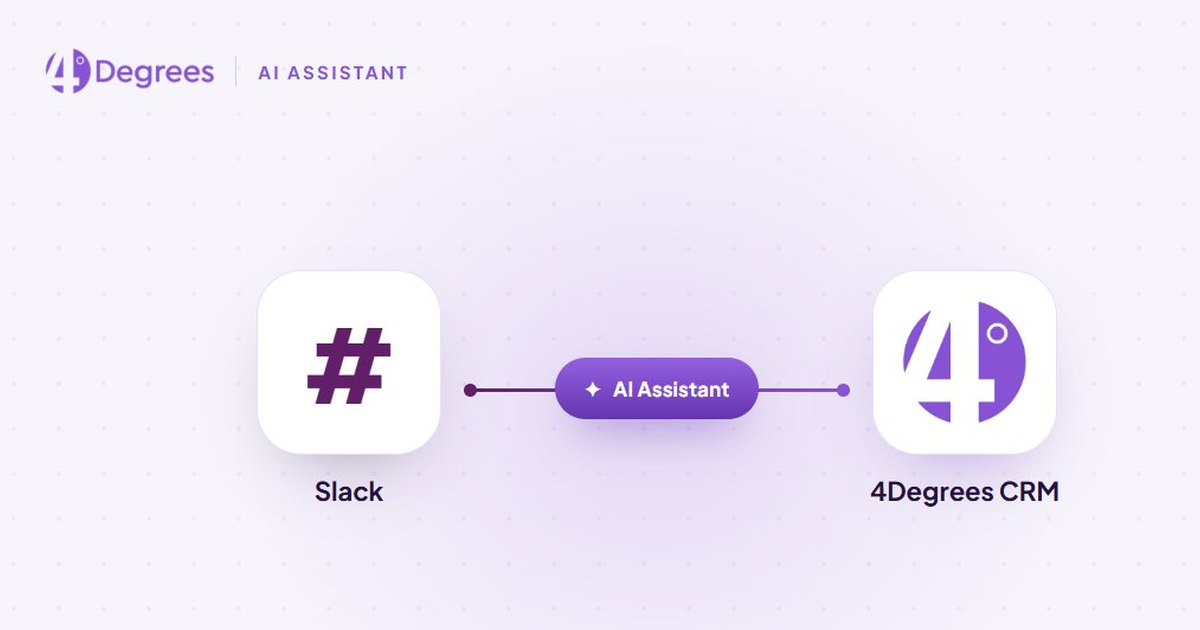
- 4Degrees: pricing is seat-based and varies by configuration and use case. All AI capabilities, including the AI Assistant, Document Intelligence, and MCP, are included in every subscription, with no AI credits, usage fees, or usage limits.
- Additional implementation, configuration, or integration work can raise the total cost
- HubSpot (lower tiers): starts with low entry pricing, but costs can scale rapidly as contact volumes increase
These tools are often used to support early- to mid-stage deal workflows, pipeline visibility, and portfolio monitoring.
Pros
- Lower upfront cost relative to enterprise platforms
- Faster setup and time to value
- AI-powered, flexible, and scalable for small and mid-sized teams
- Real-time visibility into relationships, pipelines, and dashboards
Cons
- May require extensions or integrations for highly specialized workflows
- Less suited for firms that need deeply customized reporting or multi-entity structures out of the box.
Category 2: Salesforce-Based CRMs
(Altvia, Navatar, custom Salesforce setups)
Salesforce-based CRMs are built on the Salesforce ecosystem and are often chosen by firms that want maximum customization. These platforms are commonly used by PE firms and alternative investment teams that need to manage complex workflows involving multiple stakeholders, approvals, and reporting requirements.
Pricing expectations
Base Salesforce licenses are commonly priced around $100 per user per month (roughly $1,200 per user annually), but this represents only the starting point.
Firms typically add:
- Custom objects and fields
- Workflow automation
- Integrations with data providers and tools such as PitchBook
- Advanced permissions and reporting
Over time, implementation projects, consultants, and ongoing admin support can push the total cost of ownership into the tens or even hundreds of thousands of dollars.
Pros
- Highly customizable
- Broad ecosystem of integrations and partners
- Suitable for firms with complex or evolving processes
Cons
- High implementation and maintenance costs
- Slower deployment
- Ongoing reliance on internal admins or external consultants
Category 3: Enterprise Deal Platforms
(DealCloud, Dynamo, advanced HubSpot tiers)
Enterprise deal platforms are designed to manage the full investment lifecycle for large or highly complex private equity deals for investment firms. These systems typically support end-to-end workflows across deal sourcing, due diligence, portfolio management, and investor relations, and are positioned as institutional-grade solutions.
Pricing expectations
This is typically the most expensive category.
Costs often include:
- Annual licensing fees
- Multi-month implementation projects
- Paid services for configuration and customization
- Ongoing configuration or support fees
DealCloud is widely viewed as a premium enterprise platform with significant service costs. Dynamo is also enterprise-grade, with pricing that varies based on modules, services, and configuration. Advanced HubSpot tiers can cost tens of thousands of dollars per year, with contact tiers adding an additional $8,000–$10,000 or more.
Pros
- Deep industry focus
- Built for complex workflows and reporting needs
- Supports large teams across the full investment lifecycle
Cons
- Long onboarding timelines
- High total cost of ownership
- Less flexibility for teams seeking lightweight or rapidly adaptable tools
Vendor Pricing Snapshots (What Firms Actually Pay)
When evaluating solutions to find the right CRM, firms quickly realize that pricing is shaped not just by licensing but by how well a platform supports customer relationship management, dealmaking, data capture, and ongoing investment management.
The snapshots below summarize commonly cited pricing ranges and cost dynamics based on public information and buyer feedback, with an emphasis on how these tools replace or extend systems like Excel, email, and LinkedIn.
Affinity Pricing Overview
Affinity is positioned as a relationship-focused CRM designed to reduce manual data entry by automating data capture from email and calendars.
- Public pricing range: approximately $2,000–$2,700 per user per year
- Enterprise edition available at higher price points
- Costs scale quickly as additional users are added
Affinity is often evaluated by firms looking to centralize contact information and relationship intelligence for limited partners, founders, and intermediaries.
Attio Pricing Overview
Attio offers publicly available, per-user pricing that is generally positioned at the lower end of the private-market CRM spectrum. Pricing typically ranges from $29 to $69 per user per month, which equates to approximately $348 to $828 per user annually when billed annually.
In practice, private-market teams evaluating Attio usually encounter:
- Lower, more predictable per-seat costs than private-market-specific enterprise platforms.
- Potential add-on costs for setup/configuration time and integration work, depending on how “deal workflow”- heavy the deployment becomes (e.g., objects, pipelines, reporting). (This is a common pattern for modern CRMs; Attio’s pricing is clear, but your internal build-out effort can vary.)
HubSpot Pricing Overview
HubSpot offers a broad CRM platform with entry-level plans that are relatively inexpensive compared to many PE CRMs. However, pricing becomes more complex as firms move beyond basic functionality and scale their usage.
In practice, private-market teams evaluating HubSpot usually encounter:
- Low initial entry pricing, particularly at starter tiers
- Significant cost increases at the Enterprise level, where the CRM suite can exceed tens of thousands of dollars per year
- Additional contact-based pricing, with contact tiers frequently adding $8,000–$10,000+ annually as databases grow
- A primary use case focused on outreach and marketing workflows, rather than full end-to-end deal management
As a result, HubSpot is often adopted for outbound outreach, marketing automation, and pipeline tracking, while firms that rely on it for complex deal workflows, portfolio tracking, or investor management may see costs escalate quickly as usage grows.
Salesforce and Salesforce-Based CRMs
Salesforce pricing typically starts with a core per-user license, but that figure represents only the base layer of cost for private-market teams.
The platform is frequently used as the foundation for more specialized solutions, including Salesforce-based CRMs designed for private equity and other alternative investment firms.
In practice, private-market teams evaluating Salesforce or Salesforce-based CRMs encounter:
- Core license pricing of roughly $1,200 per user per year, depending on edition
- Additional requirements to support private-market workflows, including:
- Custom objects to model deals, funds, and entities
- Advanced permissioning for compliance and internal controls
- Deal pipelines tailored to sourcing, diligence, and execution
- Reporting structures and dashboards for firm-wide visibility
- Ongoing administrative and consultant costs, as many changes require specialized Salesforce expertise
While Salesforce offers deep flexibility and a broad integration ecosystem, the true total cost of ownership often extends well beyond licensing. Over time, the need for dedicated admins, external consultants, and continuous configuration can make long-term ownership significantly more expensive than the initial price suggests.
DealCloud Pricing Overview
DealCloud is positioned as a premium, enterprise-grade CRM for private-market and real estate firms with complex workflows and reporting needs. Pricing is not published publicly and is typically customized based on firm size, use case, and scope.
In practice, private-market teams evaluating DealCloud usually encounter:
- One of the highest total cost profiles among private-market CRM platforms
- Annual software pricing that commonly falls in the low six figures, with larger or multi-office firms reaching high six figures or more, depending on scope
- Multi-month implementation timelines to configure deal workflows, reporting, and permissions
- Significant reliance on paid professional services for customization, enhancements, and ongoing maintenance
- Recurring services and configuration costs as firms expand usage or adjust workflows over time
The combination of licensing, implementation, and long-term services can substantially increase the total cost of ownership beyond the initial software quote, particularly as requirements evolve.
Common CRM Pricing Traps in Private Markets
CRM pricing surprises in private markets rarely come from a single line item. They usually surface after a firm has selected a platform and started using it in real workflows. The issues below consistently arise in buyer conversations and post-implementation reviews, yet vendors rarely spell them out clearly.
“Starting Price” vs. “Usable Price”
Most CRMs advertise a starting price that reflects a minimal configuration. In practice, private-market teams rarely see value until the CRM supports real operational needs, such as deal pipelines, internal reporting, permissions, and dashboards.
The gap between the starting price and the usable price often includes additional seats, configuration work, and features that were not obvious during evaluation. Firms may budget correctly for licenses but underestimate what it takes to make the system usable across the team and integrated into the broader tech stack.
Contact-Based Pricing Shock (HubSpot)
Contact-based pricing is a common source of unexpected cost increases. It appears reasonable at first, especially for smaller teams, but private-market firms tend to maintain large and growing networks.
Founders, intermediaries, limited partners, advisors, and historical contacts add up quickly. As contact counts increase, pricing moves up tiers even if many contacts are not actively used for outreach or follow-ups. This makes cost forecasting harder and can force firms to limit usage or absorb higher costs.
Implementation Delays and Overruns (Enterprise Vendors)
Enterprise CRM implementations often expand once real workflows are mapped. Initial timelines rarely account for the full complexity of deal processes, reporting expectations, or how the CRM needs to fit within the existing tech stack.
Additional reporting requests, revisions to deal stages, and more complex integrations commonly extend timelines and increase professional services costs beyond initial estimates.
Maintenance Costs Hidden in the Salesforce Ecosystem
Salesforce-based CRMs offer flexibility, but that flexibility requires ongoing maintenance. Even small changes, such as adding fields or updating dashboards, often require admin time or the involvement of outside consultants.
Over time, firms may need dedicated internal resources or recurring consultant support to manage accumulated customizations. These costs are rarely visible early on but materially affect long-term ownership.
Add-On Modules That Inflate Long-Term Cost
Many CRM platforms rely on modular pricing. Core functionality may be reasonably priced, but advanced capabilities such as automation, reporting, analytics, security, or integrations are often sold separately.
As firms expand their use of CRM and rely on it for more reporting, coordination, and operational visibility, these modules become necessary. Annual spend increases gradually, making long-term cost easy to underestimate.
Many CRM platforms rely on modular pricing. Core functionality may be reasonably priced, but advanced capabilities such as automation, reporting, analytics, security, or integrations are often sold separately.
As firms expand their use of CRM and rely on it for more reporting, coordination, and operational visibility, these modules become necessary. Annual spend increases gradually, making long-term cost easy to underestimate.
AI features are becoming the newest add-on category. Some vendors gate AI behind higher tiers, meter it with credits, or bill it as usage-based fees, which makes budgeting harder as adoption grows.
When comparing platforms, ask whether AI capabilities are included in the subscription, whether usage is capped, and what happens to cost as your team relies on AI more heavily. Pricing models differ widely here: 4Degrees, for example, includes all of its AI functionality in every subscription with no credits or usage limits.
Paying for Features You Don’t Actually Use
A final trap is buying for future complexity that never materializes. Some firms select enterprise platforms for safety, then use only a fraction of the available functionality.
When adoption does not match platform depth, teams fall back on spreadsheets or side tools while still paying for unused features.
Final Recommendations
Choosing the right CRM in the private markets is less about finding the lowest sticker price and more about aligning cost with how your firm actually operates. The recommendations below reflect what experienced buyers focus on after going through real evaluations and implementations.
Match Your CRM Budget to Workflow Complexity, Not Seat Count
Seat count is the easiest number to compare, but it is rarely the most important one. A small team running complex deal pipelines, reporting, and permissions can incur higher costs than a larger team using a CRM in a lightweight way. Start by mapping your workflows, reporting needs, and integrations, then assess which CRM category realistically supports those requirements without unnecessary overhead.
Always Ask for Total Cost of Ownership (TCO), Not Just Licensing
Licensing is only part of the picture. Implementation fees, required modules, data limits, admin resources, and ongoing services all contribute to long-term cost. Ask vendors to walk through a full first-year and multi-year cost scenario to avoid surprises once the CRM is live.
Understand Where Pricing Scales Over Time
Some pricing elements scale predictably, while others do not. Contact tiers, add-on modules, and professional services can increase gradually as usage expands. Understanding which costs grow with data volume, integrations, or reporting needs will help you budget more accurately as the firm evolves.
Consider Implementation Timeline and Internal Capacity
A more powerful platform often requires more time and internal ownership to maintain. Be realistic about how much configuration, administration, and ongoing support your team can handle. A CRM that fits your capacity today often delivers more value than one designed for future complexity that may never arrive.
Need help understanding CRM pricing for private-market teams?
Our team can walk you through the landscape and help you evaluate which CRM type aligns with your workflow and budget.