Building and maintaining deep relationships is crucial to your success as a private equity dealmaker.
The stronger your relationships with C-level executives, bankers, fund managers, venture capital firms, and other stakeholders are, the more you can improve your deal flow and find new investment opportunities while adding the most value to your firm’s portfolio companies.
But relationships don’t just happen automatically; they must be nurtured, monitored, and followed up with consistent, thoughtful investor communications.
To effectively manage and maximize the value of your relationship network, your organization requires customer relationship management (CRM) software purpose-built for the private capital industry.
Selecting the right CRM is critical to ensuring your workflows, automation, and tracking align with your firm's investment strategy and to improving decision-making across your deal teams.
Most private equity firms still rely on outdated tools such as Excel spreadsheets and generic contact management applications rather than adopting scalable CRM software solutions designed specifically for private equity investors.
Your CRM should serve as your firm’s central hub for data management, deal sourcing, portfolio monitoring, and pipeline management. It should optimize key features of the deal-making process, eliminating manual data entry and enhancing data enrichment to keep your contact information accurate and actionable. This enables you and your team members to make informed decisions, spend more time on meaningful outreach, and focus on value creation across your portfolio.
With dozens of vendors offering similar CRM tools, navigating the private equity CRM market can be overwhelming.
This article will highlight the most popular CRMs used by private equity firms in 2026, helping you understand the key features and functionality to look for when evaluating modern CRM software providers, including those that leverage AI-powered automation and third-party data.
Let’s get started.
What to Look for in a Private Equity CRM
Private equity firms have different needs than a typical sales organization. A deal cycle can run for months or years. Relationships span decades. The data your team generates (emails, meetings, introductions, follow-ups) is valuable institutional knowledge that disappears if your CRM doesn't automatically capture it.
These are the criteria to consider when evaluating private equity CRM software.
Automated Data Capture
Manual data entry is the main reason CRMs fail at PE firms. If your team has to log every interaction, they won't. Look for a CRM that captures emails and calendar activity automatically and syncs with both Gmail and Microsoft Exchange. The best systems build your contact and deal history as a byproduct of the work your team is already doing.
Relationship Intelligence
Contact management and relationship intelligence are not the same thing. Relationship intelligence analyzes the strength and recency of your team's connections across your entire network. It surfaces warm introduction paths to target companies and flags when key relationships have gone quiet. For firms where proprietary deal flow depends on who you know, this directly impacts deal outcomes.
Deal Pipeline Management
PE deal pipelines are not linear. A company you passed on two years ago becomes a target again. A deal that stalls at IC approval needs to stay visible, not get archived. Your CRM should support flexible pipeline stages that reflect how your firm actually works, not a sales funnel designed for 30-day close cycles.
Reporting and Analytics
You need visibility into deal activity, team engagement, and relationship health without exporting data to a spreadsheet. Look for built-in reporting on deal stage velocity, sourcing attribution, and relationship coverage across your firm's target sectors. The goal is a system where the answers to common IC questions are already in the dashboard.
Integrations
Your CRM is one part of a broader tech stack. It should integrate natively with your email client, calendar, and data providers such as PitchBook, Crunchbase, and LinkedIn, so your team doesn't have to switch between platforms to get a complete picture of a company or contact. Integrations that require Zapier or custom development add friction and maintenance burden over time.
AI Capabilities
AI is now part of the evaluation checklist, and the practical questions are what it does with your firm’s data and what it costs. Look for an AI Assistant that answers questions from your deal and relationship history, Document Intelligence that turns CIMs and decks into reviewable CRM suggestions, and an MCPthat connects ChatGPT and Claude to your firm’s context. Also confirm whether AI is included or sold through credits, add-ons, or higher tiers.
Implementation and Support
A CRM that takes six months to deploy and requires a dedicated admin to maintain is a liability, not an asset. Purpose-built PE CRMs deploy in weeks. The implementation team should understand private markets workflows without needing a lengthy education on how PE firms operate.
DealCloud
DealCloud is a cloud-based legacy CRM system designed for the capital markets. Private equity, hedge funds, LPs, and other financial services firms across asset classes rely on DealCloud as their CRM to manage business development, track deal flow, manage portfolios, and manage investor relationships through reporting tools and integrations with investor portals.
As with other deal flow management platforms lacking relationship intelligence, you must devote time to manually keeping data clean & organized and ensuring your team constantly enters contact, interaction, and deal data directly into the DealCloud system.
On the other hand, modern private equity CRMs with relationship intelligence automatically create and enrich profiles with high-quality data from third-party sources and API integrations, saving your team hundreds of hours per year.
Given its size, deploying DealCloud can be expensive and time-consuming, requiring significant manual effort and data uploads. A significant advantage is that DealCloud can be customized to meet your firm’s needs, but this customization can lead to costly deployments that last up to 6 months or more. Once the system is configured, most changes and customizations must be handled exclusively by the DealCloud team, which adds cost and complexity.
Pros
- Industry-Specific Design: built for private equity, ensuring its features align directly with industry needs.
- Customizability: The platform is highly customizable, allowing firms to tailor it to their unique requirements, including customizable dashboards.
Cons
- Learning Curve: Given its comprehensive suite of tools, new users face a steep learning curve.
- Integration Challenges: Setting up integrations with specific third-party tools requires additional development work.
- User Interface: Some users find the UI/UX outdated and difficult to use.
- High Cost: Compared to other options, Dealcloud can be expensive, and firms would need to budget extra for any required customization.
A different provider might be better for your firm if you want a more modern, easier-to-use, agile CRM platform that can be deployed quickly without needing expensive customization work or ongoing professional services.
Altvia
Altvia is a web-based CRM built for alternative investment firms and built on Salesforce.
PE firms and other alternative investment organizations rely on Altvia to organize deal flow, track fundraising, monitor portfolio companies, and manage limited partners and investor relations.
On the CRM side, Altvia is similar to other generic CRMs, as it lacks relationship intelligence and relies on manual data entry rather than automation and enrichment.
The Altvia CRM enables firms to track their deal pipeline and streamline due diligence by using customizable checklists for each stage of the evaluation process. From a reporting standpoint, Altvia enables users to create custom reports and dashboards to track deals, deal-flow sources, valuation trends, and other analyses.
Unfortunately, Altvia is not a relationship intelligence CRM. It cannot analyze your firm’s relationship network to uncover new opportunities, measure relationship strength, or provide you with real-time alerts across your network. If you want to leverage your team’s network for deal sourcing, due diligence, portfolio monitoring, and strategic outreach, you’ll need to look elsewhere.
Pros
- Industry-Specific Design: Tailored to private equity and alternative investment sectors.
- Dedicated Support: Altvia’s support team is well-versed in the challenges private equity firms face.
- Robust Data Analytics: Altvia offers powerful tools for firms to derive actionable insights and make data-driven decisions.
Cons
- Learning Curve: New users might face a steep learning curve, especially those unfamiliar with the Salesforce interface.
- Lack of Integration with Other Tools: Integration with third-party tools is limited or requires customization, which adds costs.
- High Cost: Some firms may find Altvia’s pricing higher than other options in the market.
Salesforce
Salesforce.com is the largest and most well-known CRM platform. As pioneers in cloud-based CRM, Salesforce enables companies of all sizes and industries to manage their CRM and other software needs.
Unfortunately for PE firms, Salesforce is a transactional CRM designed for transactional sales teams that move prospects through a sales pipeline.
Given its size and breadth, most private equity firms find Salesforce too complex for their needs. Plus, you would pay for functionality you do not need, such as customer support and marketing automation modules. As a result, your team may be reluctant to use Salesforce as their private equity CRM.
Using Salesforce as a private equity CRM requires extensive and expensive customization from a third-party Salesforce partner or consultant. Most customization work would need to be complemented by a personalized training program, adding an extra layer of complexity and cost and making your deployment more time-consuming and costly than out-of-the-box solutions.
When working with a Salesforce consultant to customize the system, you will also need to budget for any additional enhancements or changes required after the initial implementation.
If your firm has a team dedicated to managing and customizing your Salesforce CRM, there might be a case for using Salesforce instead of other " out-of-the-box” private equity CRMs. As the most widely used CRM, thousands of integrations in the Salesforce AppExchange allow you to integrate with other tools in your technology stack and connect with other systems using native integrations or Zapier.
Like other CRMs on this list, Salesforce still relies on manual data entry, which means your team spends more time on admin work and less time building relationships and sourcing new opportunities. If your firm uses Salesforce and wishes to remain with it, 4Degrees can integrate with it to activate your relationship network, uncover more opportunities, and eliminate data entry.
Pros
- Highly Customizable: Salesforce is known for its customizability, allowing firms to adapt it to their unique operational requirements.
- Integration Capabilities: Salesforce’s ability to integrate with various third-party tools and data sources ensures a streamlined workflow. Including 4Degrees for relationship intelligence.
- Scalability: Salesforce can serve small and large firms, scaling its capabilities as it grows.
Cons
- Customization Requires Expertise: Making significant changes or setting up complex integrations might require expensive technical expertise.
- Lack of Expert Support: Salesforce support staff are not well-versed in the common challenges of private equity (PE) firms.
- Steep Learning Curve: It requires substantial training for users to fully harness its capabilities.
4Degrees
4Degrees is an all-in-one relationship intelligence CRM platform built by ex-investors exclusively for firms in the private markets.
The platform gives your team a visual deal pipeline in list or Kanban views, tracking every deal across the full lifecycle from origination to close. It syncs with Microsoft Exchange and Gmail to automatically capture interactions and enrich contact data with providers such as PitchBook, serving as your firm's single source of truth.
Workflow automation creates contact and company profiles, eliminates manual data entry, and integrates with your existing processes. The reporting and analytics engine provides real-time metrics and snapshots of relationships, fundraising, and deal progress across the investment lifecycle, while relationship intelligence analyzes the strength of your team's connections to surface warm introductions and the best path to any company, expert, or investor in your ecosystem.
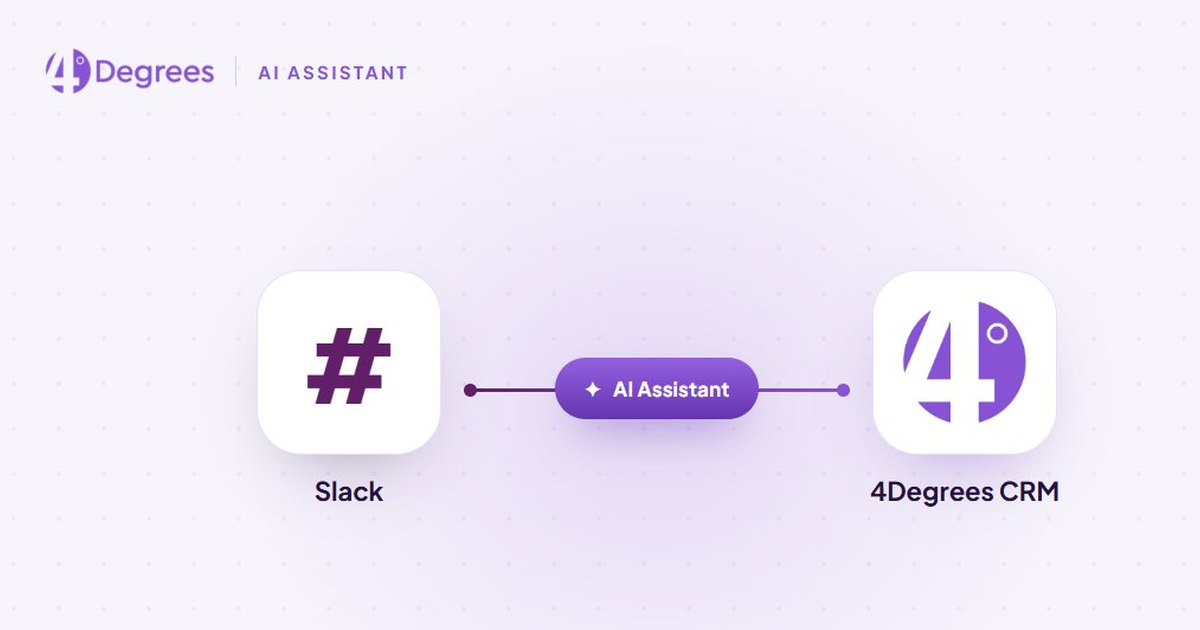
4Degrees also includes AI across the deal workflow. Document Intelligence turns CIMs, pitch decks, and PDFs into reviewable CRM suggestions. The AI Assistant answers questions about deals, relationships, and pipeline in plain language, both in 4Degrees and Slack. 4Degrees MCP connects your CRM data to ChatGPT and Claude for meeting preparation and deal evaluation.
Network notifications alert you when contacts make investments, change jobs, or send other signals worth acting on, and a mobile app for iOS and Android keeps your network accessible from anywhere.
Pros
- Relationship intelligence built from the ground up for private markets, surfacing warm introduction paths and the strength of your team's connections
- Automated data capture from Gmail and Microsoft Exchange, eliminating manual data entry
- Network activity alerts for job changes, investments, and other signals across your relationships
- Native PitchBook integration for enriched contact and company data
- Built by ex-investors who understand PE workflows, which shortens implementation and reduces the education burden on your firm
Cons
- As a platform focused on private markets, 4Degrees is not the right fit for teams outside of deal-driven financial services
- Relationship intelligence delivers the most value when adopted across the full deal team, not just a subset of users
Pricing: 4Degrees starts at an accessible price point, with plans that scale for enterprise firms. All AI capabilities, including the AI Assistant, Document Intelligence, and MCP, are included in every subscription with no AI credits or usage fees. See 4Degrees pricing for current details.
The pages below provide a more detailed comparison of 4Degrees vs. other common CRMs used by private equity teams.
Affinity
Affinity is a deal management and CRM platform built for deal-driven firms to automate data entry, manage their relationship networks, and track their organization’s deal flow pipeline. Using proprietary technology, Affinity provides teams with a deeper understanding of their network to source new relationships and deals.
Affinity claims to save investors hundreds of hours per year that would otherwise be spent on manual data entry by automatically plugging into Gmail and Outlook and exporting email content into contact and deal profiles.
Although it is a capable product, Affinity falls short of providing users with news and updates about people in their networks. This makes it hard for investors to stay engaged with their contacts and build deeper relationships.
Pros
- Automated Data Capture: Automatically capture data, reducing manual entry and ensuring accuracy..
- Customizable: Tailored to the specific needs of different industries and teams.
Cons
- Learning Curve: While designed to be user-friendly, those new to CRM platforms might face a learning curve
- Integration Limitations: While it offers integrations, it may not fully support all third-party tools PE firms use, potentially requiring additional tools.
- Pricing: The cost compared to similar solutions may be a barrier for smaller teams.
Meridian
Meridian is a PE-native CRM founded by a team with backgrounds at Blackstone, Thoma Bravo, and CVC Capital Partners. The platform is built around automated pipeline capture from email and calendar data. Outlook integration logs activity without manual entry, and built-in company and executive data reduces the need for separate data provider subscriptions.
Because Meridian was designed for PE from day one, its pipeline stages and deal structures reflect long investment cycles and IC processes rather than being adapted from a sales model.
Pros
- Purpose-built for PE, with deal structures designed for how investment committees and deal teams actually work
- Automated data capture from Outlook
- Bundled company and executive data
- Founded by PE practitioners who have lived the workflows the platform supports
Cons
- Newer entrant (founded 2023) with a smaller installed base than established platforms, meaning less third-party evidence of long-term performance
- The integration ecosystem is still developing compared to platforms with years of third-party connector build-out
- Long-term product stability and support track record are still being established
Dynamo
Dynamo is a highly customizable, end-to-end alternative asset management platform used by private equity, investment banking, and other investment management firms. It is not a dedicated CRM company; its CRM capabilities are part of a broader feature set that includes back-office applications.
For PE firms seeking a CRM to track their deals and leverage their relationships, Dynamo can be cumbersome, with extra functionality that some firms may not need. Like other private equity CRM solutions, Dynamo relies on manual data entry to maintain up-to-date contact and activity records.
As a complete end-to-end platform, Dynamo integrates with popular SaaS tools used by PE firms, but the options are limited compared to other, more modern Private Equity CRMs.
If you are looking for a PE CRM system but don’t need back-office functionality, consider another solution.
Pros
- Holistic Solution: From investor relations to deal tracking, Dynamo offers a comprehensive suite of tools that eliminates the need for multiple software solutions.
- Customizability: Offers customization options that enable firms to adapt the platform to their specific operational requirements.
- Dedicated Support: Provides extensive support, enabling users to quickly address challenges.
Cons
- Not Specialized: Given its multi-purpose nature, Dynamo does not offer the most robust CRM functionality.
- Updates and Changes: As with many platforms, frequent updates require users to adapt and relearn certain functionalities.
- Pricing: Given its diverse feature set, Dynamo may command a premium price.
eFront
eFront offers a suite of features tailored to the unique demands of the alternative investment industry. From comprehensive portfolio management and robust risk assessment tools to transparent investor reporting, advanced data analytics, and seamless integration capabilities, eFront ensures that every facet of alternative investment is covered.
Acquired by BlackRock in 2019, eFront has further solidified its position in the market, leveraging its parent company’s vast resources and expertise to cater to its clientele’s evolving needs.
Other CRMs
This guide reviewed the leading CRM platforms private equity firms use. Other platforms include Microsoft Dynamics, designed for firms that rely on other Microsoft enterprise applications, and Navatar, a Salesforce-based private markets CRM that offers industry-specific workflows and tools for deal sourcing, investor relations, and portfolio management.
By onboarding a CRM not designed specifically for private equity professionals, you risk spending considerable time and resources explaining your specific use cases to their implementation teams, who may not have deep expertise in the alternative assets sector. On the other hand, by working with a team of former investors or a provider with a platform purpose-built for private markets, your firm will start seeing value from your CRM much faster and support strategic goals such as fundraising, investor communications, and long-term value creation.
Finding the Best CRM For Private Equity
In an industry where relationships are your most valuable assets, you need a CRM backed by a team that has previously been there and understands your unique needs. Spending time and money trying to shoehorn and adapt a CRM platform designed for a transactional sales process does not make sense for your private equity firm.
If you want to leverage your firm’s most valuable asset to find and close more proprietary deals while automating time-consuming processes such as data entry, you should request a personalized demo of 4Degrees, the best private equity CRM and Relationship Intelligence platform built for private equity teams.
For firms evaluating CRM platforms for other private markets verticals, see our guides to the best CRM for investment banking in 2026, the best CRM for venture capital in 2026, and the best CRM for M&A in 2026