

Salesforce is one of the most recognized CRM software platforms in the world. In enterprise sales, it is often considered the default CRM system.
Private equity firms operate in a different environment.
A PE firm is not optimizing for outbound velocity. It is managing multi-year relationships across funds, founders, bankers, Limited Partners, operating partners, and co-investors. It is tracking sourcing channels, running structured due diligence, monitoring portfolio performance, and coordinating internal approvals before capital is deployed.
When firms attempt to use Salesforce as a PE CRM, they often discover that, while the platform is powerful, it was not built for the realities of private markets. Custom objects can replicate fund structures. Consultants can redesign the data model. Dashboards can be built to reflect investment committee reporting.
But customization takes time. Pricing increases quickly. Internal ownership becomes mandatory. And most importantly, adoption often struggles.
That is why many private equity firms are now actively searching for the best CRM purpose-built for private markets and alternative investment firms.
This guide provides a detailed, objective evaluation of the leading Salesforce alternatives for private equity deal teams in 2026.
Why Salesforce Often Feels Misaligned in PE
Salesforce is built around a Lead → Account → Opportunity model. That works for transactional sales environments.
Private equity deal flow is not transactional.
A single company may appear multiple times across funds. A banker relationship may drive deal sourcing for a decade. A Limited Partner may also be a co-investor. A portfolio CEO may become a future acquisition target.
Your pipeline management needs to reflect:
- Overlapping relationships between funds and stakeholders
- Multi-year deal cycles
- Investment committee approvals
- Sourcing channels and banker coverage
- Portfolio monitoring and exit timing
- Ongoing investor relations
Salesforce can be configured to support this. But that often requires:
- Heavy customization
- Ongoing administrative overhead
- Significant consulting costs
- Continued reliance on spreadsheets
The largest pain point is not capability. It is friction.
If associates must perform manual data entry, they will delay it. If partners cannot quickly access relationship context in real time, they default to inbox search.
Over time, what was intended as a customer relationship management platform becomes a reporting tool instead of a living source of truth.
That friction is what modern private markets CRMs aim to eliminate.
What Institutional Firms Actually Evaluate
When firms evaluate a Salesforce replacement, the question is not simply which tool has the most key features.
It is:
- Will this CRM system reduce friction?
- Will it help us streamline deal flow and reporting?
- Will it scale with us as we grow into a more scalable organization?
- Will it support our use cases as both investors and asset managers?
Different platforms solve different problems. Some focus heavily on relationship intelligence and contact management. Others prioritize compliance, document management, and governance. Others emphasize portfolio management and LP reporting.
Below is a comparison of the major CRM platforms.
Affinity: Automated Relationship Tracking Across the Firm
Affinity is widely used across venture capital, private equity, and investment banking. Its strength lies in automated relationship tracking and firm-wide activity capture.
As a CRM solution for dealmakers, it continuously analyzes email and calendar interactions to map connectivity across the organization.
For firms with large networks and high interaction volume, this visibility can be useful.
Where Affinity Is Strong
- Automated firm-wide relationship tracking
- Email and calendar activity capture
- Customizable deal pipelines
- Integration with LinkedIn and data providers
- Centralized tracking of relationship ownership
Affinity emphasizes automation in surfacing relationship insights. For some firms, especially those with broad sourcing funnels, this can help prioritize outreach.
As with any automated system, PE firms should evaluate how insight suggestions fit into existing workflows. Many investors prefer automation to support sourcing while keeping final judgment firmly in human hands.
Best Fit
Affinity may be appropriate for:
- Firms with extensive external networks
- Teams comfortable with a more feature-dense interface
- Organizations seeking automated relationship mapping at scale
Altvia: Salesforce-Based Private Equity CRM
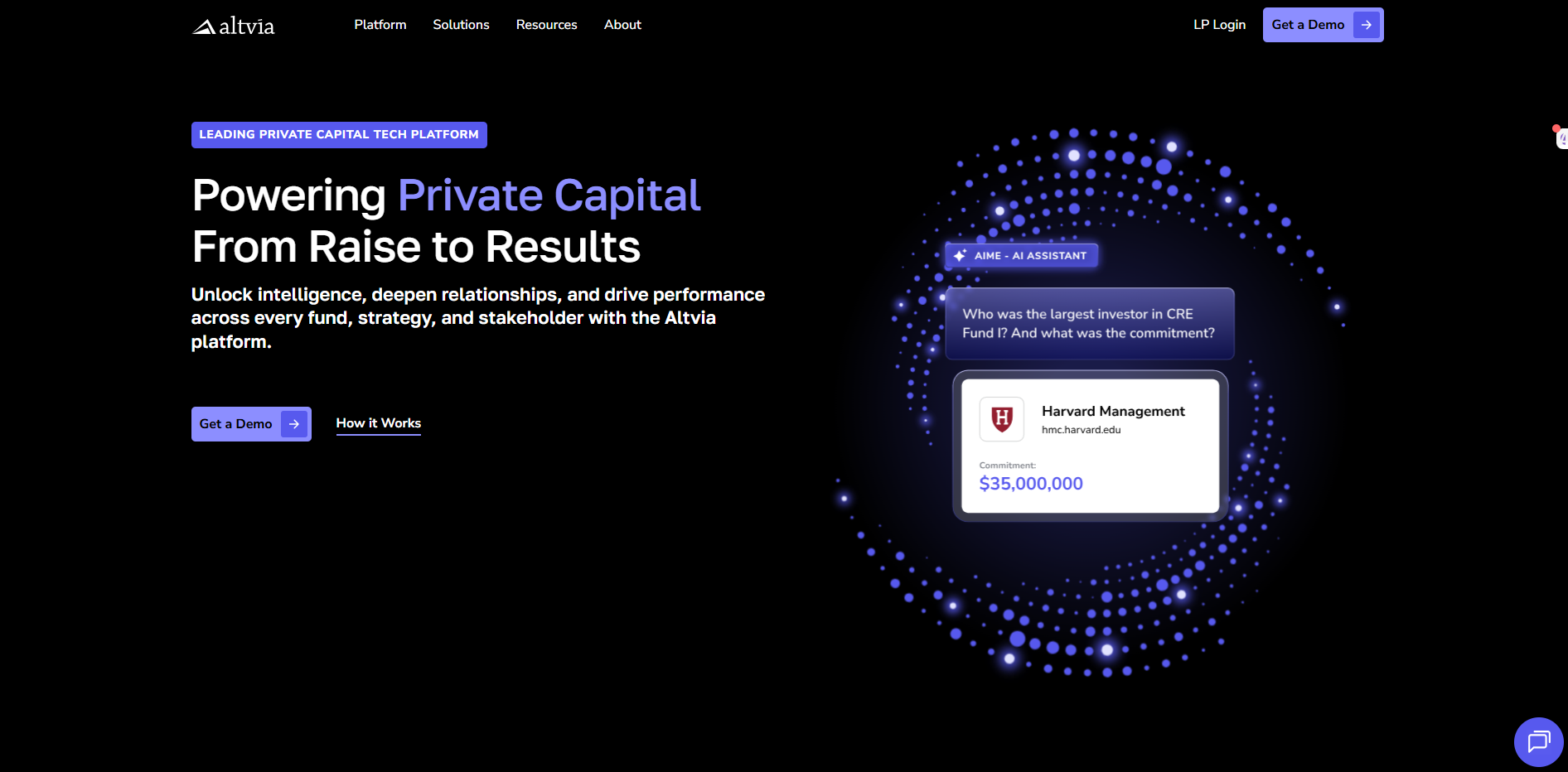
Altvia is another platform often considered by private equity firms. Built on the Salesforce platform, Altvia provides a PE-focused layer on top of it.
Key Features
- Private equity-focused data models
- Integrated contact management
- Investor portal capabilities
- Salesforce-native workflow automation
Altvia may appeal to firms that want Salesforce’s core architecture but with PE customization layered on top.
Dynamo Software: Fund Operations and LP Management
Dynamo Software approaches the CRM challenge from the fund operations side. While it includes deal tracking functionality, its core strength lies in LP management and capital activity tracking.
For firms where fundraising and investor communication are central, Dynamo can serve as a core component of their private equity CRM stack.
Where Dynamo Stands Out
- LP and investor relations tracking
- Capital call and distribution tracking
- Portfolio KPI dashboards
- Secure investor portals
- Integration with fund accounting systems
- Fund-level reporting and management features
Best Fit
- Growth equity and lower middle-market firms
- Teams with active fundraising cycles
- Firms balancing deal execution with ongoing LP reporting
Intapp DealCloud: Enterprise-Grade Private Equity Software
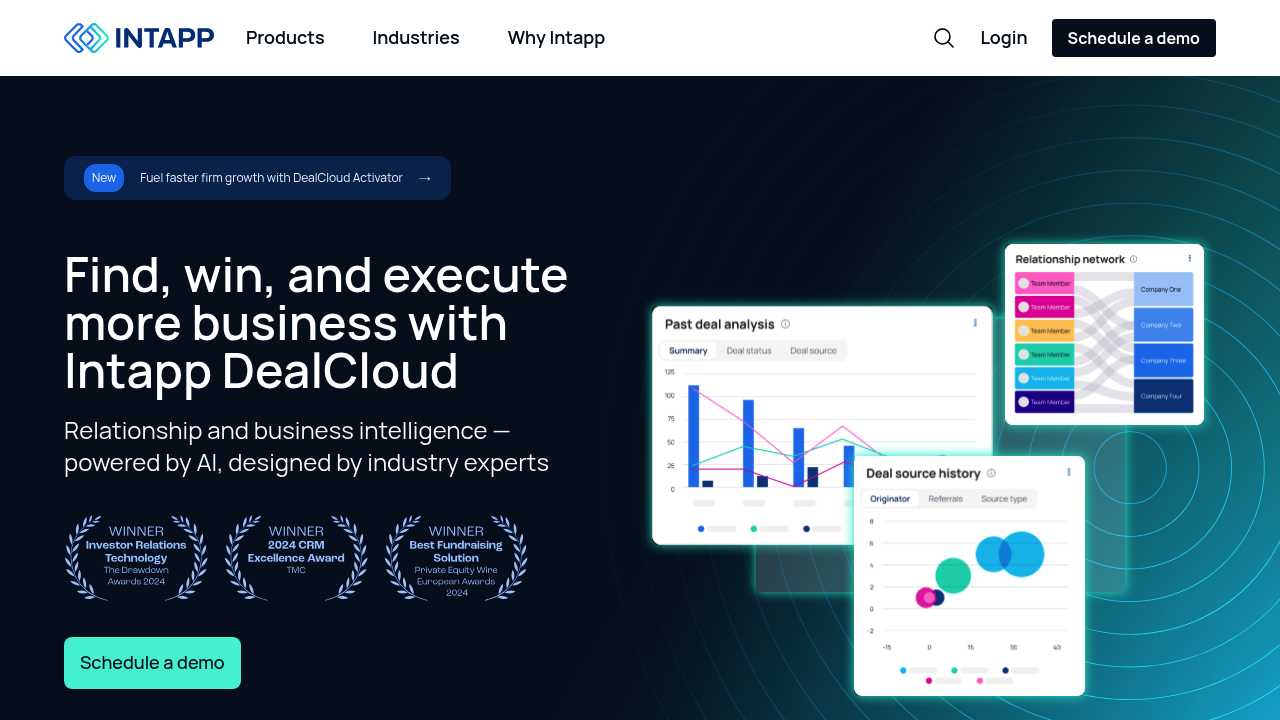
Intapp DealCloud is regarded as one of the most comprehensive private equity software platforms on the market. It supports sourcing, diligence, compliance workflows, LP reporting, and portfolio monitoring.
For institutional firms evaluating a Salesforce alternative for private equity, DealCloud frequently enters the conversation.
Where DealCloud Excels
- End-to-end deal lifecycle management
- Configurable investment committee workflows
- LP reporting and investor portals
- Compliance tracking and audit trails
- Integration with accounting and document systems
DealCloud is powerful and highly configurable. That depth often requires longer implementation timelines and dedicated internal ownership.
Best Fit
- Large institutional PE firms
- Multi-strategy private markets platforms
- Teams prioritizing governance, compliance, and structured reporting
4Degrees: Relationship Intelligence Built for Private Equity
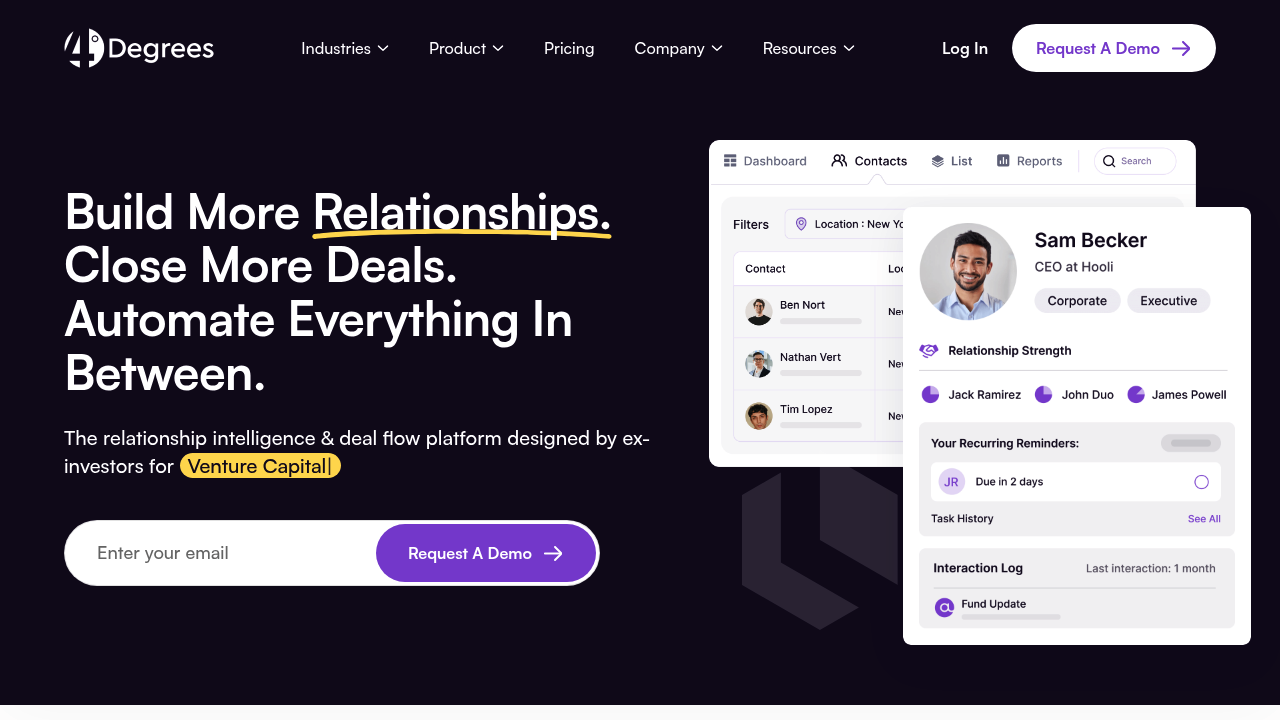
4Degrees was founded by former investors who had experienced the limitations of generic CRMs inside deal teams. Rather than adapting a sales CRM, it was designed from the ground up as a relationship intelligence CRM for private markets.
At its core, 4Degrees combines CRM for deal pipeline management with automated relationship mapping. Email and calendar interactions from Outlook and Gmail are captured automatically. Contact records are enriched in the background. The system analyzes relationship strength across the firm, helping partners understand who has the strongest path to a founder, banker, or LP.
Where 4Degrees Stands Out
- Automated email and calendar sync that eliminates manual logging
- Relationship strength scoring across the firm’s network
- Real-time alerts when key contacts change roles or appear in relevant news
- Integrations with PitchBook, Crunchbase, DealRoom, and other enrichment data providers
- Outlook, Gmail, LinkedIn, and browser extensions for in-workflow use
- Reporting dashboards with sourcing attribution and pipeline visibility metrics
Because it is built as private equity deal management software, the data model supports funds, portfolio companies, co-investors, and intermediaries without heavy customization.
AI That Reduces Work Without Removing Control
4Degrees uses AI to reduce manual work across document intake, deal tracking, and relationship management.
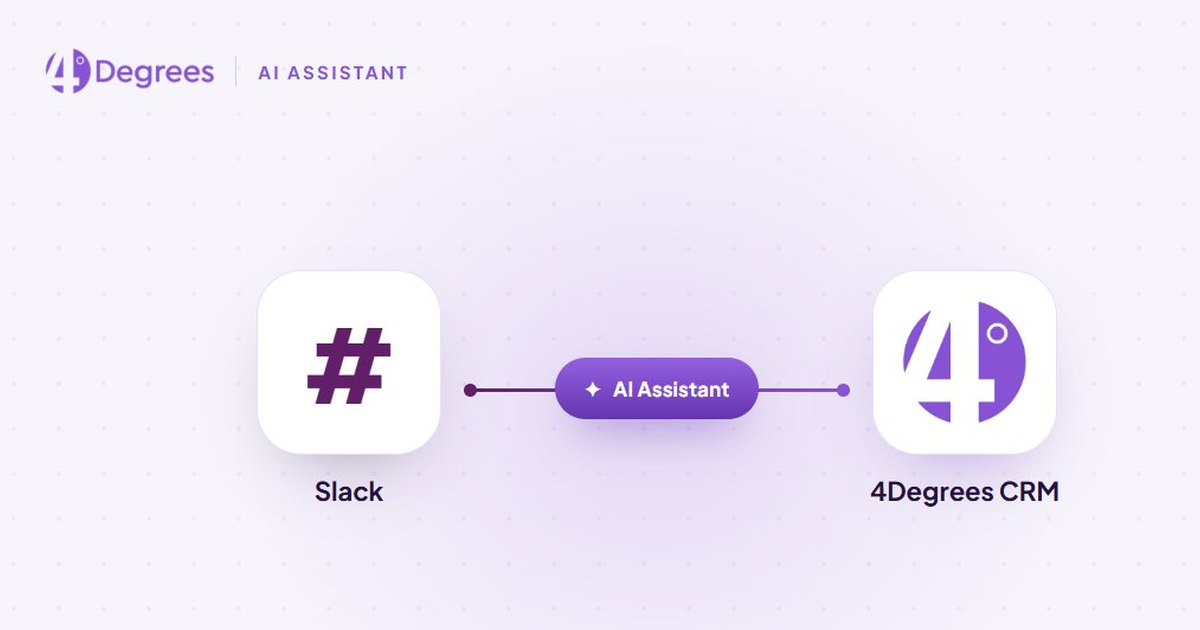
Document Intelligence extracts key details from CIMs, banker decks, and pitch materials and stages them in CRM fields for review. The AI Assistant answers plain-language questions about deals, contacts, companies, and pipeline activity, while the 4Degrees MCP lets ChatGPT and Claude work with the firm’s actual relationship and deal context.
Deal teams retain final approval before anything is saved. All AI capabilities are included with every subscription, with no credits, usage fees, or usage limits.
Best Fit
4Degrees tends to resonate with:
- Mid-market and growth equity firms
- Teams that source heavily through relationship networks
- Firms seeking a private markets CRM that works out of the box
- Deal teams that want to reduce manual data entry without surrendering control
What to Evaluate When Replacing Salesforce
When selecting a true Salesforce alternative for private equity, feature comparisons only go so far. The real evaluation comes down to alignment.
Private Markets Data Model
Does the system natively support funds, portfolio companies, co-investors, and LP relationships?
Relationship Intelligence
Can it surface the warmest path to a target before outreach?
Deal Flow Management
Does it support flexible pipelines that match PE deal cycles?
Automation
Does it reduce manual entry and enrich records automatically?
Investment Committee Visibility
Can partners quickly see sourcing attribution, deal stage, and relationship context before meetings?
Adoption Risk
Will partners and associates actually use it daily? Even the most powerful system fails if it does not offer a user-friendly interface that fits naturally into how dealmakers already work.
AI Capabilities
How does the platform use AI to reduce manual work, surface insights, and help teams act on their data? Look for capabilities that support research, data management, meeting preparation, and workflow execution while keeping users in control. Confirm how AI is packaged, which plans include it, and whether there are additional usage fees, credits, or limits.
Choosing Infrastructure, Not Just Software
Selecting a CRM is not simply about replacing Salesforce. It is about defining how your firm wants to operate over the next decade.
In private equity and the broader capital markets, competitive advantage often hinges on information quality and relationship awareness. If your system cannot provide a single source of truth for relationship history, sourcing attribution, and portfolio visibility, blind spots emerge.
The right CRM should unify workflows. It should centralize deal data across sourcing, diligence, investment committee preparation, and portfolio monitoring. It should reduce friction through intelligent data capture, not create more manual work. It should integrate with the broader technology ecosystem, including market data providers, accounting tools, and reporting platforms.
Many firms struggle not because their software lacks features, but because adoption stalls. A system with a steep learning curve or heavy administrative requirements quickly becomes shelfware. Dealmakers revert to spreadsheets. Partners rely on memory. Critical information becomes fragmented.
The goal is not simply to deploy another CRM platform. The goal is to establish an operational infrastructure that:
- Supports relationship-driven sourcing
- Improves visibility into pipeline and performance metrics
- Streamlines investment committee preparation
- Enhances collaboration across internal stakeholders
- Scales as the firm grows
There is no universal answer when evaluating Salesforce alternatives. Large institutional firms may prioritize governance and compliance. Growth-oriented teams may emphasize sourcing velocity and relationship intelligence. Fund-focused organizations may focus on investor reporting.
What defines the best private equity CRM for an organization is not brand recognition or feature density. It aligns with how dealmakers source opportunities, conduct due diligence, manage LP relationships, and oversee portfolio performance.
Taking the time to evaluate purpose-built private markets platforms alongside Salesforce configurations often clarifies what matters most when selecting the right CRM for the next phase of growth.