

Mergers and acquisitions today involve far more moving parts than they did even a decade ago. Deal teams are managing larger pipelines, more data, and a wider range of stakeholders, all while facing pressure to move faster and make better decisions. A single transaction can involve dozens of advisors, thousands of documents, and months of negotiations, all unfolding under tight deadlines.
Many firms still rely on Excel spreadsheets, shared folders, and disconnected systems to manage critical parts of this process. Over time, these tools become difficult to maintain and harder to trust. When key diligence files are buried in email threads, models live on personal drives, and relationship history exists only in someone’s inbox, teams lose visibility and control.
As deal activity increases, so does the need for systems that streamline workflows, improve efficiency, and support collaboration. Modern M&A software gives professionals the structure and transparency they need to compete in an increasingly crowded market.
The Modern M&A Workflow: From Sourcing to Integration
The M&A process begins long before a deal is signed and continues well after it closes. It starts with identifying potential targets, managing inbound and outbound opportunities, and building relationships that can lead to future transactions. In many cases, these early conversations and introductions determine which firms gain access to the most attractive opportunities.
Once a deal moves forward, teams enter the due diligence phase, where financial, legal, and operational reviews take place alongside intensive document management and risk assessment. Hundreds of files must be reviewed, updated, and approved, often across multiple workstreams. It is common for diligence questions to be answered in private emails rather than shared systems, creating gaps in visibility and accountability. Execution follows, requiring careful coordination around negotiations, internal approvals, and closing activities.
After the transaction is complete, post-merger integration becomes critical. Knowledge must be transferred, reporting systems aligned, and relationships maintained. At every stage, success depends on having connected, real-time systems that support the full workflow and keep participants aligned.
Common Challenges Without the Right M&A Software
Without dedicated M&A software, many deal teams rely on a patchwork of email threads, spreadsheets, and shared folders to manage critical information. Over time, this creates fragmented data, manual reporting processes, and inconsistent documentation. Important diligence materials may sit in outdated folders, while updated versions circulate privately among team members.
As complexity grows, insights are delayed, and organizational memory disappears. When an associate leaves or a banker changes firms, months of deal history and relationship context can vanish overnight. Teams are forced to reconstruct decisions from scattered messages and incomplete notes. Follow-ups become inconsistent, and key deadlines are missed.
Leadership teams are left with limited visibility into pipeline health, resource allocation, and deal timelines. These gaps slow execution, increase operational and compliance risk, and reduce competitiveness. Firms that cannot automate and streamline their workflows often struggle to make informed decisions in fast-moving markets.
The Core Software Categories Every M&A Team Should Understand
To manage this complexity, deal teams rely on a combination of specialized software. Rather than depending on a single system, most firms build a technology stack that integrates multiple platforms to support sourcing, analysis, execution, and integration.
Customer relationship management (CRM) platforms form the foundation by centralizing relationship data, deal activity, and communication history. They help teams track contacts, companies, and interactions while maintaining visibility into active pipelines.
Virtual data rooms enable secure document sharing, access controls, and compliance during sensitive stages of a transaction. Due diligence and document management tools support review workflows, version control, and advanced search capabilities.
Workflow and project management tools coordinate tasks, timelines, and internal communication. Financial modeling and valuation software supports scenario analysis, forecasting, and integration with spreadsheet-based models.
Some firms also use general-purpose platforms such as Salesforce, DealCloud, Navatar, or Attio to support parts of their workflow. However, these systems are often designed for broader relationship- or sales-related use cases, so M&A teams typically require more specialized tools and automation to manage complex transactions effectively.
While each of these tools plays an important role, most teams eventually discover that without a strong central system, even the best individual platforms fall short.
Why CRM is the Operating System for Modern M&A
At the center of an effective M&A technology stack is a purpose-built CRM platform designed for dealmaking. It serves as the system of record for relationship data, historical deal activity, and organizational knowledge.
By providing a centralized source of truth, a CRM allows teams to understand who introduced a deal, how relationships developed, and why past opportunities succeeded or failed. This historical context becomes increasingly valuable as firms scale and personnel change.
A strong CRM supports every stage of the deal lifecycle, from early sourcing through negotiations, closing, and long-term portfolio management. It connects people, companies, and transactions in context, allowing teams to move forward with confidence.
With real-time dashboards, pipeline analytics, and advanced reporting capabilities, CRM systems enable data-driven decision-making. Perhaps most importantly, they reduce friction by minimizing handoffs, eliminating duplicate work, and improving collaboration. When anchored to a reliable CRM, every other tool becomes more effective.
Pipeline and Deal Management with Relationship Intelligence: The Role of 4Degrees
Successful M&A execution depends on understanding relationships as much as financial performance. Platforms built specifically around relationship intelligence, such as 4Degrees, help teams see who knows whom, identify warm introduction paths, and prioritize outreach throughout the deal process. This capability is especially valuable for investment banking, private equity, and corporate development teams competing for limited opportunities.
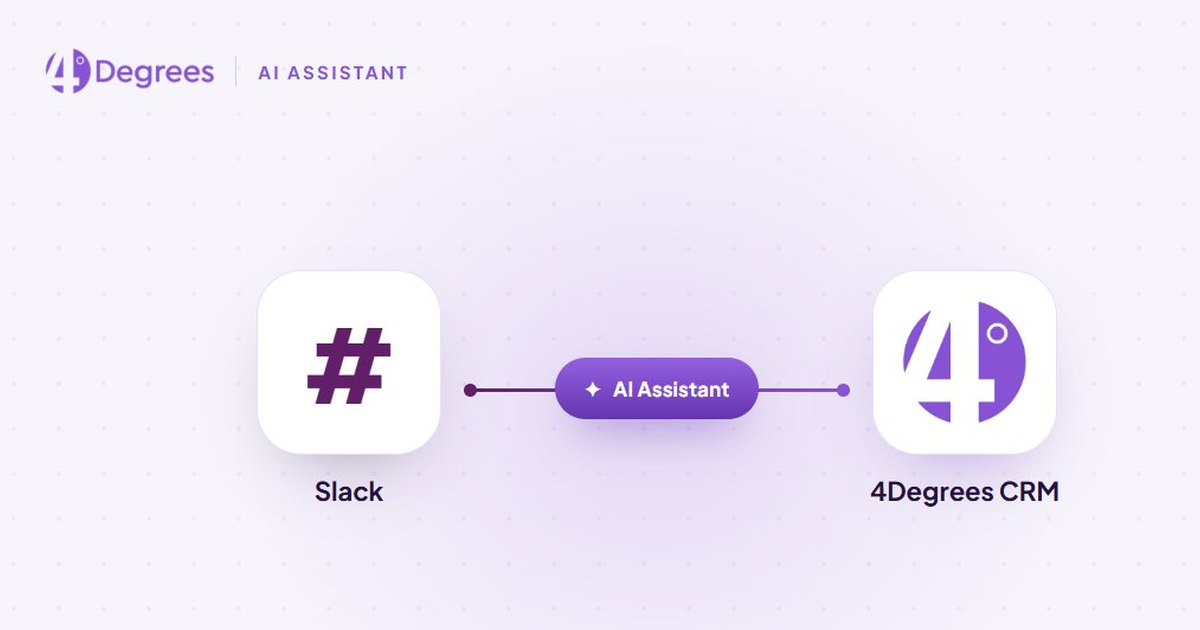
4Degrees pairs relationship intelligence with specific AI capabilities: Document Intelligence converts CIMs and diligence files into structured CRM fields through suggestions reviewers approve, the AI Assistant answers plain-language questions about deals and relationships, and the MCP lets ChatGPT and Claude work with the firm's actual deal context. As a CRM, the platform supports centralized deal pipeline management through customizable stages, standardized playbooks, and built-in scoring.
Automated data enrichment improves accuracy during due diligence, while shared visibility and activity tracking preserve organizational memory across teams throughout the M&A lifecycle.
Within the broader technology stack, 4Degrees serves as the core CRM layer and a central source of truth, integrating with virtual data rooms (VDRs) and analytics tools. By streamlining workflows and enabling automation, firms can manage relationships more effectively, protect deal value, and scale their operations over time.
For many firms, this is when they begin evaluating purpose-built platforms for relationship-driven dealmaking.
Key Features to Look for in M&A Software
When evaluating M&A software, usability and adoption should be a top priority. An intuitive interface, clear templates, and a structured onboarding process help team members get up to speed quickly, whether they are joining a new deal or managing an existing target company. Many platforms also offer training resources such as webinars and guided walkthroughs to support long-term adoption.
Customization and scalability are equally important. Flexible fields, configurable workflows, and reusable templates allow firms to adapt their systems as deal volume grows and synergies become more complex. Strong integration with tools such as Microsoft Outlook and Calendar improves coordination and reduces manual effort.
Security and compliance features are critical for protecting sensitive information. Look for role-based permissions, document redaction, and detailed audit trails to ensure proper access control.
Finally, robust reporting functionality, including pricing analysis and performance dashboards, helps leaders evaluate results and maximize deal outcomes.
Evaluate AI claims just as carefully. Look for tools that extract CIM data with human review, answer questions from your own pipeline history, and connect ChatGPT or Claude to firm data with permissions enforced. Specific, reviewable workflows matter more than broad AI labels.
How to Build a Practical M&A Technology Stack
Building an effective M&A technology stack starts with selecting a strong CRM platform as the foundation for relationship and deal management. This central system should connect communications, data, and historical context across every stage of a transaction.
From there, teams can layer specialized tools such as virtual data rooms, financial modeling software, and workflow management systems to support diligence, valuation, and integration. Integration should be prioritized to avoid data silos and duplicated effort across platforms.
Equally important is focusing on adoption through structured training and thoughtful change management. When M&A software solutions are easy to use and well-connected, teams spend less time managing technology and more time executing high-quality M&A transactions. In practice, simple, integrated stacks consistently outperform overly complex systems.
Modern M&A Requires Modern Technology
As deal cycles compress and competition for high-quality opportunities intensifies, having the right technology foundation is no longer optional. A CRM-centered approach allows firms to manage relationships, data, and execution within a single connected system, while relationship intelligence provides a meaningful advantage in competitive markets.
Scalable, integrated platforms enable faster decisions, stronger collaboration, and better long-term outcomes across the transaction lifecycle. To see how 4Degrees supports modern deal teams with purpose-built tools and relationship-driven insights, request a demo and explore the platform in action.