

Quick Answer: Best Affinity CRM Alternatives
The top alternatives to Affinity CRM for deal-driven teams in 2026 are 4Degrees, DealCloud, Dynamo, and Salesforce:
- 4Degrees is the strongest alternative for VC, PE, investment banking, M&A advisory, and corporate development teams that need automated data capture, network-based relationship intelligence, AI-powered workflows, and a CRM that can be implemented quickly without heavy configuration.
- DealCloud fits large firms that need deep configurability, LP tracking, compliance workflows, and the internal operations resources to support a longer implementation.
- Dynamo is best for firms that need CRM, investor relations, LP management, fundraising, and portfolio analytics on a single broader platform.
- Salesforce is designed for transactional B2B sales teams and usually requires significant customization to support private markets workflows.
- HubSpot can work for firms that want a familiar sales and marketing CRM, but it is not purpose-built for relationship-driven deal sourcing, mandate management, or private markets workflows.
- Attio is an emerging modern CRM option for teams that want flexibility and a newer interface, but firms should evaluate whether it can support the depth of relationship intelligence, reporting, and deal management required by private markets teams.
- Affinity remains a reasonable starting point for small or early-stage teams that prioritize ease of setup and basic relationship mapping over deeper deal workflow flexibility.
Who This Article Is For
This comparison is most relevant to professionals across financial services and capital markets:
- Venture capital firms managing sourcing pipelines, founder relationships, co-investors, and LP communications
- Private equity firms running deal sourcing, IC prep, diligence tracking, fundraising, and portfolio monitoring
- Investment banks and M&A advisory teams managing buyer/seller relationships, deal pipelines, mandate tracking, outreach, and process execution
- Corporate development teams tracking acquisition targets, strategic partnerships, internal stakeholders, and executive relationships
- Merchant banks, placement agents, family offices, and advisory firms that rely on long-term relationships to originate and close opportunities
- Partners, principals, vice presidents, associates, investor relations leaders, and business development professionals who depend on network quality to source, evaluate, and win deals
This article is not written for small businesses or general sales teams evaluating customer relationship management tools for traditional sales pipelines. The workflows, buyer criteria, and platform comparisons here are specific to deal-driven private markets firms.
Why Firms Are Re-Evaluating Affinity in 2026
Affinity was a meaningful step forward for firms moving off Excel spreadsheets, and it is still recognized for its relationship mapping, email capture, and ease of setup.
But as firms grow, several limitations can arise in evaluating alternatives.
- Pipeline and mandate inflexibility: Affinity can work for simple pipelines, but firms managing multiple funds, strategies, transaction types, or mandates often need more flexible workflows. When the CRM does not match how deals move, teams revert to spreadsheets.
- Deal management gaps: Relationship visibility is valuable, but deal teams also need to track next steps, diligence, mandate activity, buyer outreach, and internal updates. Affinity is often stronger for relationship tracking than end-to-end deal management.
- Limited workflow automation: Deal teams want the CRM to reduce repetitive work, from updating stages to logging activity and keeping records up to date. When automation is limited, the system still depends too much on manual effort.
- Bulk outreach limitations: Investment banks, placement agents, and other outreach-heavy teams need flexible email workflows. If bulk communication is too rigid, users move outreach back into email or spreadsheets.
- Pricing and value concerns: As teams add users, reporting, integrations, or advanced features, the price-to-value question becomes more important. Firms want to know whether the capabilities they need are included or require higher-tier plans.
- User adoption challenges: A CRM only works if the team uses it. If simple updates take too many clicks or users do not trust the data, they often fall back to Excel, Google Sheets, or their inboxes.
- Data quality and relationship movement: Private markets relationships change constantly as people move firms, join portfolio companies, or launch funds. Teams need relationship context to stay current without constant manual cleanup.
The net result: Affinity is strong at capturing and organizing activity, but many firms need a CRM that goes further. They want a system that helps them manage deal workflows, understand the strongest path into a company or LP, report on activity and outcomes, and keep the team aligned without creating extra administrative work.
How to Evaluate an Affinity Alternative: Eight Criteria
These eight factors separate tools that fit private markets workflows from those that require workarounds:
- Relationship intelligence: Does the platform measure connection strength and identify warm introduction paths, or does it only handle basic contact management?
- Automated data capture: Does the system eliminate manual data entry by syncing email, calendar, and meeting data automatically, and does it stay current when team members are not actively logging activity?
- Pipeline flexibility: Can you configure deal stages to fit your business across multiple fund structures, transaction types, sourcing channels, diligence workflows, and advisory processes?
- Deal and mandate management: Can the platform support the full lifecycle of a deal, from sourcing and relationship building to diligence, IC prep, outreach, closing, and post-close follow-up?
- AI capabilities: Can the CRM help your team ask questions, summarize information, structure unorganized data, prepare for meetings, and work with real firm context instead of generic prompts?
- Reporting and analytics: Can partners run real-time pipeline reviews, sourcing attribution reports, coverage reports, and activity summaries without exporting to a spreadsheet?
- Implementation complexity: How long does onboarding take? A long implementation with external consultants creates costs beyond the license fee and can slow adoption before the team ever sees value.
- Onboarding and support: Is there dedicated support from someone who understands private markets workflows, or will your team need to translate investment, advisory, and fundraising processes into a generic CRM model?
TL;DR: Which Platform Wins for Deal Teams
For most VC, PE, and investment banking teams, 4Degrees is the strongest Affinity alternative. It automates data capture, surfaces warm-introduction paths, supports flexible pipelines across the deal lifecycle, and adds AI capabilities that work within the firm’s actual deal, relationship, and pipeline context.
DealCloud is the better choice for large firms that need enterprise-grade configurability and have the internal operations resources to support a longer implementation.
Dynamo fits firms that want CRM, investor relations, LP management, and portfolio analytics in one system.
Salesforce and HubSpot should generally be considered only when a firm already has existing infrastructure or a broader sales and marketing motion that justifies the customization.
Attio is worth evaluating for teams interested in a modern CRM experience, but firms should confirm it can support the relationship intelligence and private markets workflows they need.
4Degrees: Best Overall Alternative for Private Markets Teams

4Degrees is a relationship intelligence CRM built by former investors to manage deal flow, relationships, and pipelines across venture capital, private equity, investment banking, M&A advisory, corporate development, and commercial real estate.
The platform automates contact and activity capture, maps relationship strength across the firm’s network, and surfaces warm introduction paths to founders, executives, intermediaries, LPs, buyers, and strategic counterparties. Pipelines are configurable for sourcing, diligence, IC prep, mandate tracking, fundraising, and closing without requiring a developer.
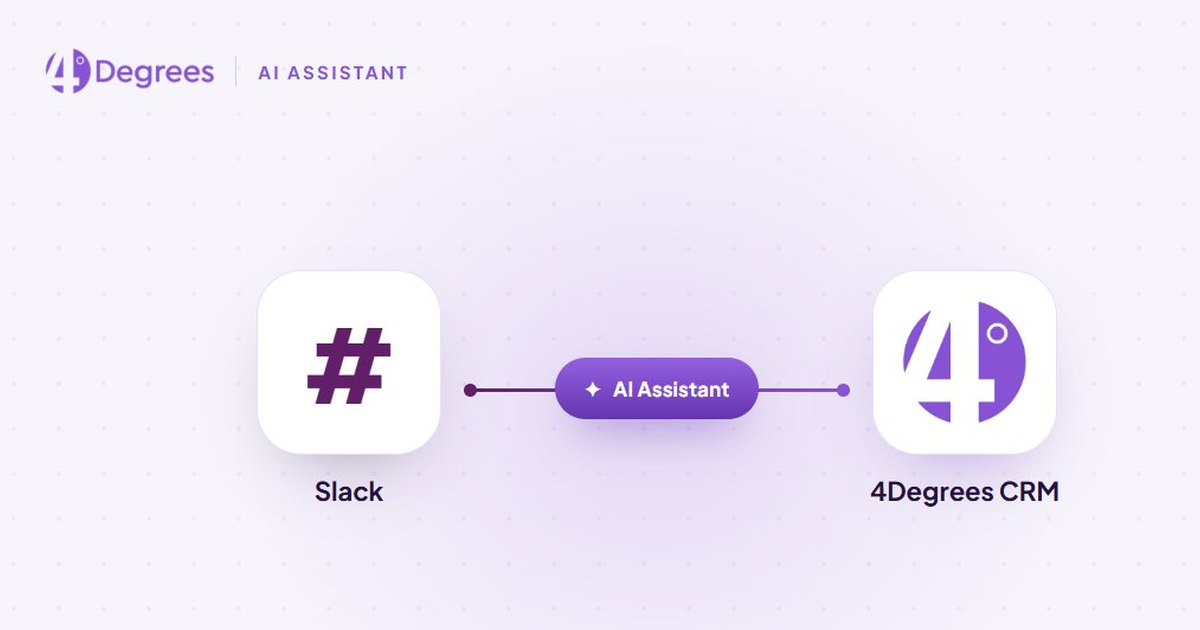
4Degrees also includes AI capabilities built around real firm context. AI Assistant helps users ask questions across deals, contacts, companies, relationships, and pipeline activity. Document Intelligence turns unstructured materials, such as pitch decks, CIMs, and diligence documents, into structured CRM data. 4Degrees MCP connects the firm’s CRM context to tools like ChatGPT and Claude, helping teams use AI with the information already in their deal and relationship workflows.
Best for: VC and PE firms, investment banks, M&A advisory teams, corporate development groups, and other relationship-driven teams that need automated data capture, network-based relationship intelligence, AI-powered workflows, flexible pipelines, and a CRM that reflects how deals are actually sourced and managed.
Key strengths
- Automated data capture via Gmail and Outlook, reducing manual entry and keeping relationship activity current.
- Network-based relationship intelligence that helps teams identify the strongest path to founders, executives, LPs, intermediaries, and counterparties.
- AI-powered workflows through AI Assistant, Document Intelligence, and MCP, helping teams ask questions, structure deal materials, and use AI with real firm context.
- Flexible deal pipelines for sourcing, diligence, mandate tracking, fundraising, and other private markets workflows.
- Reporting and analytics for pipeline health, sourcing attribution, relationship activity, and team coverage.
- Fast implementation and onboarding support from a team that understands private markets workflows.
Limitations: 4Degrees is not designed to replace a full fund administration platform or LP portal for firms that need back-office fund operations in the same system.
Skip if: You need an integrated fund administration system or LP portal as your primary requirement. Dynamo or a purpose-built fund administration platform may be a better anchor.
DealCloud: Best for Large Firms with Complex Configuration Requirements

DealCloud is a highly configurable relationship intelligence platform used by large private equity firms, investment banks, and corporate development teams. It centralizes deal sourcing, due diligence tracking, relationship management, fundraising workflows, and reporting across large, distributed teams.
DealCloud is often evaluated by firms seeking a highly configurable system with complex internal processes. It can support large datasets, custom workflows, and detailed reporting across funds, teams, and relationships.
Best for: Large PE and IB firms with dedicated operations or IT staff, complex fund structures, regulatory reporting requirements, and the budget and timeline to support a longer implementation.
Strengths:
- Flexible data model and workflow automation for complex, multi-step deal processes
- Integrated modules for fundraising, LP management, marketing analytics, and compliance tracking
- Custom dashboards for granular fund-level and portfolio-level analysis
- Strong fit for larger organizations that have the resources to configure and maintain a broad platform
Limitations:
- Implementation can take months and may require significant internal resources or outside consultants
- Interface and configuration can feel heavy for smaller or faster-moving teams
- Some teams may find the platform more complex than their actual workflow requires
- Reporting and integrations may require more setup than expected
- Relationship intelligence may require configuration rather than being the center of the product experience
Skip if: Your team is under 30 people, you need to be live quickly, or you do not have an internal operations owner for configuration and ongoing maintenance.
Dynamo: Best for Firms Managing IR and Portfolio Analytics

Dynamo is an Affinity competitor that combines CRM, investor relations, fundraising, LP management, and portfolio monitoring into a single system for investment managers seeking a broader front-office and back-office platform.
Dynamo is often considered by private capital and asset management firms seeking to consolidate investor relations, portfolio analytics, and CRM into a single environment. For firms where LP management and portfolio tracking are as important as deal sourcing, Dynamo can be a strong fit.
Best for: Mid-to-large private capital firms where investor relations, fundraising, LP communications, and portfolio analytics are as important as pipeline management.
Strengths:
- Unified environment for deal sourcing, fundraising, LP communications, and portfolio tracking
- Power BI integration for fund and portfolio performance dashboards
- LP portal, e-signature management, and mass email tools
- Stronger fit for firms that want CRM as part of a broader investment management system
Limitations:
- A broader scope can create a steeper learning curve for teams that only need CRM
- Custom reporting and workflow changes may require vendor assistance
- Relationship intelligence is not as central as in purpose-built relationship-focused CRMs
- Some teams may find the system too rigid if their main goal is improving deal flow management
- Adoption can be difficult if users have to leave their normal workflow too often to update records
- AI capabilities should be evaluated carefully to understand whether they are mature, usable, and connected to the workflows your team actually needs
Skip if: Your primary need is deal sourcing, relationship management and pipeline visibility. Dynamo’s advantages apply when you also need LP portals, fundraising workflows, or portfolio monitoring in the same system.
Salesforce: Best for Transactional Sales Teams, Not Dealmakers
Salesforce is built for transactional B2B sales, including lead management, opportunity stages, forecasting, account management, and marketing automation. It is one of the most powerful general CRM platforms in the market, but that strength does not automatically make it a strong fit for private markets.
Deal-driven teams do not work like traditional sales teams. They manage long relationship arcs, multi-party processes, warm introductions, referral networks, buyer lists, founders, intermediaries, LPs, and strategic counterparties. Salesforce can be customized to support some of this, but that customization usually requires time, budget, and dedicated administration.
Best for: Large enterprises with existing Salesforce infrastructure, internal administrators, and a strong reason to keep all relationship or sales data inside Salesforce.
Strengths:
- Extensive app ecosystem via AppExchange
- Highly scalable infrastructure with strong enterprise security and compliance tooling
- Powerful workflow automation for teams running large outbound campaigns
- Strong fit for organizations that already operate heavily inside Salesforce
Limitations:
- No native private markets relationship intelligence without customization
- Deal stages and pipeline logic reflect B2B sales, not investment or advisory workflows
- Tracking warm introductions, mandate activity, and relationship strength often requires custom development
- Pricing complexity grows as firms add modules, users, integrations, and administrators
- Ongoing maintenance typically requires a dedicated administrator or third-party consultant
Skip if: You do not already have Salesforce infrastructure and internal expertise. Starting fresh with Salesforce for a 10-to-50-person deal team is usually slower and more expensive than using a purpose-built private markets CRM.
HubSpot: Best for Sales and Marketing Teams, Not Private Markets Deal Flow
HubSpot is a popular CRM for sales and marketing teams. It is easy to understand why some firms consider it: the interface is familiar, the ecosystem is broad, and it can support email marketing, forms, automation, and pipeline tracking for many traditional sales organizations.
For private markets firms, however, HubSpot requires workarounds. It is built around sales pipelines, leads, contacts, deals, and marketing automation, not long-term relationship intelligence or non-linear deal sourcing. A venture capital firm, investment bank, or corporate development team may be able to use HubSpot for basic contact management, but the system is not purpose-built for tracking warm introductions, intermediary coverage, LP relationships, mandate workflows, or multi-party deal processes.
Best for: Firms that already use HubSpot and only need lightweight CRM functionality, basic outreach, and simple pipeline tracking.
Strengths:
- Strong marketing automation and email campaign functionality
- Broad ecosystem of integrations
- Useful for firms with a more traditional demand generation or lead management motion
- Easier to adopt than heavily customized enterprise CRMs in some cases
Limitations:
- Not designed for private markets workflows or relationship-driven deal sourcing
- Pricing can increase quickly if teams require extra features
- Teams may still rely on spreadsheets for scoring, segmentation, and relationship context
- Lacks Relationship Intelligence
- Deal flow reporting and sourcing attribution may require manual configuration
- Can feel either too generic or too complex, depending on the team’s use case
Skip if: Your firm needs relationship intelligence, warm-introduction mapping, deal-sourcing workflows, investment-banking mandate tracking, or private-markets-specific reporting.
Attio: Best for Teams Evaluating a Modern, Flexible CRM
Attio is an emerging CRM platform that appeals to teams seeking a more modern, flexible CRM experience. It is often considered by technically sophisticated teams that want a clean interface, adaptable data models, and a newer approach to CRM.
For deal-driven teams, Attio may be worth evaluating as part of a broader CRM search, especially if the firm values flexibility and modern UX. However, firms should look closely at whether it can support the private markets-specific workflows that matter most: relationship intelligence, warm introduction paths, email and calendar capture, deal pipeline flexibility, reporting, and long-term data quality.
Best for: Teams that want a modern CRM interface and are comfortable evaluating whether a flexible general CRM can be configured around their specific workflows.
Strengths:
- Modern user experience
- Flexible CRM structure
- Appealing to technically sophisticated teams
- Potential fit for teams that want to build more of their own workflow model
Limitations:
- Not as established in private markets as platforms built specifically for VC, PE, investment banking, or M&A advisory
- Firms should validate how deeply it supports relationship intelligence and warm introduction workflows
- Deal sourcing, mandate management, and private markets reporting may require configuration
- May not offer the same private markets onboarding expertise as purpose-built platforms
Skip if: Your team wants an out-of-the-box private markets CRM with relationship intelligence, deal-flow workflows, and onboarding support already designed to fit how investment and advisory teams operate.
When Affinity Is Still a Reasonable Choice
While platforms like 4Degrees, DealCloud, Dynamo, HubSpot, Attio, and Salesforce each serve different CRM needs, Affinity remains a suitable option for certain firms.
Affinity can be a good fit for smaller teams that want to move off spreadsheets, capture relationship activity, and get a CRM running without a heavy implementation. It is often strongest when the firm’s workflow is simple, the team is small, and the primary need is visibility into relationships rather than deep deal workflow management.
3 specific scenarios where Affinity still fits:
- First-time CRM adopters: Teams moving off spreadsheets may benefit from Affinity’s lower configuration overhead.
- Smaller teams with low deal volume: A focused sourcing strategy at a small firm may not need advanced pipeline flexibility, mandate management, or complex reporting.
- Teams focused mainly on relationship mapping: If the primary goal is to understand recent interactions and maintain a basic relationship database, Affinity may be enough.
If your team is running multiple funds, managing portfolio companies, tracking LP relationships, executing investment banking mandates, coordinating bulk outreach, or trying to understand the strongest relationship path to a specific target, Affinity’s limitations may become more visible.
Why 4Degrees Stands Out Among Affinity Alternatives
The core difference is how each platform helps your team use relationship, deal, and pipeline data.
Affinity can help show that your team has interacted with someone. 4Degrees goes further by mapping your firm's relationship network and scoring connection strength based on interaction history, recency, and firmwide connectivity. That makes it possible to surface who is most likely to have a strong path to a founder, LP, executive, banker, intermediary, or counterparty.
That difference matters in sourcing calls, where a warm introduction can open the door that a cold email cannot. The same dynamic plays out in fundraising, where LP relationships develop over years of consistent contact rather than a single pitch.
In investment banking and M&A advisory, mandate execution depends on tracking multiple relationships, buyers, sellers, and outreach paths simultaneously, and the firm's ability to see those connections clearly often determines whether a process moves forward. Even in IC prep, the full relationship history around a company or contact can shape decision-making in ways that pipeline data alone cannot.
Network-Based Relationship Intelligence
4Degrees scores connection strength across the firm’s relationship graph, helping teams identify the strongest path to a target company, executive, founder, LP, or intermediary. This works across teams and historical interactions, not just recent activity.
AI That Works With Your Deal Context
4Degrees adds an AI layer built around the firm’s actual CRM data. AI Assistant helps users ask questions across deals, relationships, contacts, companies, and pipeline activity without digging through lists, filters, or reports.
Because the AI works with the relationship and deal context already within 4Degrees, it can support meeting prep, pipeline review, account research, sourcing analysis, and follow-up planning more effectively than generic prompts alone.
Document Intelligence for Deal Materials
Document Intelligence helps turn unstructured materials, such as pitch decks, CIMs, diligence documents, and company materials, into structured CRM data. This reduces manual entry and helps keep deal records current inside the system of record.
4Degrees MCP for ChatGPT and Claude
4Degrees MCP connects CRM context to AI tools like ChatGPT and Claude. This lets teams use AI with real relationship, deal, and pipeline data instead of relying on disconnected exports or generic prompts.
4Degrees remains the system of record, while AI tools can work with the context needed to answer questions, generate outputs, and support real-deal work.
Automated Data Capture
4Degrees syncs emails, meetings, and notes across Gmail and Outlook, keeping the CRM current without manual logging. That is especially important for teams in back-to-back meetings, live processes, fundraising, or travel.
Flexible Pipelines
4Degrees pipelines can be configured for sourcing, diligence, IC approval, fundraising outreach, portfolio monitoring, mandate tracking, and corporate development workflows. Teams can adjust these workflows without relying on developers or consultants for every change.
Reporting Without Spreadsheet Workarounds
4Degrees gives teams visibility into pipeline health, sourcing attribution, relationship activity, deal progression, and coverage without requiring manual downloads or spreadsheet cleanup.
Fast Implementation and Adoption
Most firms can be onboarded in days to a few weeks with support from a team that understands private markets workflows. The goal is not just to launch the CRM, but to make sure the team actually uses it.
The Smarter Way to Evaluate an Affinity Alternative
Choosing a CRM is not just about replacing one system with another. It is about finding a platform your team will actually use a year from now, with accurate data, fewer spreadsheet workarounds, and better visibility into the relationships and deals that matter.
Firms that outgrow Affinity are often looking for a CRM that can answer questions their current system cannot:
- Who has the strongest path into this company?
- Which relationships are going cold?
- Which intermediaries are sending us the best opportunities?
- Which deals moved forward, stalled, or fell out of the pipeline?
- Which contacts should we re-engage before a fundraiser, process, or conference?
- Where is our team relying on manual tracking because the CRM does not support the workflow?
- What does our CRM know that could help us prepare for this meeting?
- What information is sitting in documents that should already be structured in the CRM?
- How can we use AI with our actual deal and relationship context, not just generic prompts?
4Degrees is built to answer those questions. If your team has outgrown Affinity, relies on spreadsheets alongside your CRM, or wants to use AI with real and relationship data, 4Degrees can help.
Request a demo to see how 4Degrees supports deal-driven teams across private equity, venture capital, investment banking, M&A advisory, and corporate development.