Private equity firms rely on software across the full investment lifecycle, from fundraising and deal sourcing to due diligence, portfolio monitoring, fund accounting, and investor relations. The challenge is that no single platform is equally strong at every job.
A middle-market buyout firm may need a private equity CRM to manage relationships and deal flow, a data room for secure diligence, portfolio management software to track KPIs and EBITDA, and an investor portal for limited partners.
This guide compares 15 leading private equity software platforms by category to help you identify the right tools for your firm’s workflows, team size, and assets under management.
Best Private Equity Software at a Glance
Best Private Equity CRM and Deal-Sourcing Software
Private equity CRM software is built for long-term relationships and complex deal processes rather than linear sales funnels. The best CRM platforms help teams capture interactions, identify warm introduction paths, manage deal flow, and keep pipeline data up to date without excessive manual entry.
4Degrees: Best for Relationship-Driven Deal Sourcing
4Degrees is a relationship-intelligence CRM designed by former investors for private equity, venture capital, investment banking, and other deal-driven teams. It automatically captures email and calendar activity, enriches contact and company records, maps relationship strength, and supports customizable deal management workflows.
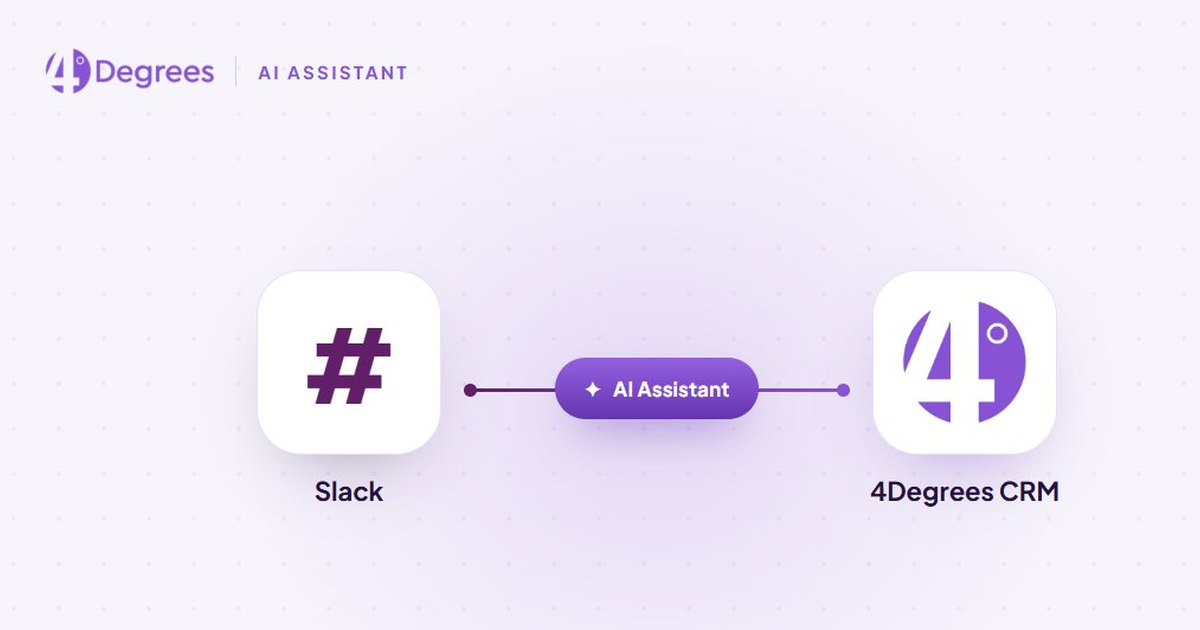
Its AI capabilities help turn information from emails, conversations, pitch decks, CIMs, and other deal documents into structured CRM data. Teams can also use 4Degrees with tools such as ChatGPT and Claude to prepare for meetings, combine internal CRM context with external research, identify relevant connections, and update records, notes, reminders, and deal activity.
4Degrees is especially well-suited to firms that rely on networks, intermediaries, founders, and investment partners to source opportunities. Teams can use it for pipeline management, meeting preparation, fundraising workflows, document exchange, and firm-wide visibility into relationships and deals.
4Degrees is designed around the workflows of relationship-driven deal teams rather than maximum enterprise configurability. Firms that need deeply bespoke processes spanning multiple business lines, complex approval structures, or extensive custom administration may prefer a more configurable enterprise CRM.
Affinity: Best for Automated Network Intelligence
Affinity combines CRM capabilities with automated activity capture and relationship intelligence. It helps teams understand who knows a target, track relationship history, manage opportunities, and connect communication activity to deal sourcing, fundraising, and portfolio-support workflows.
Affinity is a strong fit for private capital firms that prioritize network visibility and automatic email and calendar capture when evaluating a CRM.
Intapp DealCloud: Best for Complex Enterprise Workflows
Intapp DealCloud is a highly configurable CRM and deal-management platform for private capital firms. It can support relationship management, deal flow, business development, fundraising, investor relations, portfolio monitoring, compliance, and reporting.
Its breadth makes it relevant to larger organizations with multiple strategies, offices, or business lines. Firms should account for the implementation, configuration, and administration required by a more complex enterprise software platform.
Grata: Best for Private-Company Discovery
Grata is a private-market intelligence and deal-sourcing platform that helps firms discover companies, map sectors, build target lists, and qualify opportunities. It is particularly useful for middle-market teams pursuing thesis-driven sourcing in fragmented industries.
Grata complements a CRM rather than replacing one. It helps identify targets and market signals, while the CRM manages relationships, outreach, and ongoing deal flow.
Leading Data Room Software Providers
A virtual data room gives authorized participants controlled access to confidential information during due diligence, buyouts, exits, and fundraising.
Dedicated data rooms add permissions, document requests, activity tracking, Q&A, and audit trails that general file-sharing tools may not provide.
4Degrees External Data Room: Best for Keeping Documents Connected to the Deal
The 4Degrees External Data Room is available to 4Degrees customers who want document exchange to remain part of the same workflow as their relationships, notes, and transaction activity.
Teams can share existing deal documents, request materials from companies or advisors, add external participants, control who can see each item, and review submitted files.
Private equity firms can also use it to share fund and portfolio materials with prospective limited partners.
Its main advantage is continuity. The document process stays connected to the underlying deal or fundraising workflow. Firms that require a specialized standalone VDR for a particularly large or complex process may still evaluate dedicated providers.
Datasite: Best for Complex M&A Due Diligence
Datasite provides virtual data rooms and transaction-management tools built for M&A. Its platform supports secure document exchange, permissions, Q&A, redaction, activity tracking, and deal preparation.
It is a strong option for teams running complex buy-side or sell-side due diligence and exit processes.
Ideals: Best for Secure, Straightforward Collaboration
Ideals offers virtual data room software for M&A, fundraising, and other transactions involving confidential information. Its capabilities include granular permissions, document versioning, Q&A, reporting, watermarks, and audit logs.
It is a practical choice for firms that want a focused VDR with strong document controls and a relatively straightforward setup process.
Ansarada: Best for Deal Readiness and Transaction Management
Ansarada combines virtual data-room functionality with tools for M&A, capital raising, and transaction management. It supports secure document sharing, due diligence, Q&A, and structured deal preparation.
It is best suited to teams that want more than a passive repository and value workflows designed to keep transaction participants, tasks, and materials organized.
Best Portfolio Monitoring and Fund-Management Software
After an investment closes, firms need consistent data from portfolio companies.
Portfolio monitoring software helps teams collect and track financial and operating KPIs, including EBITDA, recurring revenue, cash flow, forecasts, valuations, and progress against value-creation initiatives. Fund management systems may extend these workflows with fund accounting, investor allocations, financial reporting, and general ledger capabilities.
Allvue: Best for Integrated Fund Accounting and Portfolio Operations
Allvue combines fund accounting, portfolio monitoring, reporting, and investor portal capabilities for private equity and venture capital managers. It supports finance and operations teams responsible for fund structures, allocations, investment accounting, and portfolio data.
It is a strong fit for established fund managers that want integrated back-office and portfolio workflows.
S&P Global iLEVEL: Best for Institutional Portfolio Analytics
S&P Global iLEVEL helps GPs, LPs, and fund-of-funds teams centralize private-market data. It supports data collection, valuations, analytics, cash forecasting, portfolio monitoring, and reporting.
It is especially relevant to firms whose spreadsheet-based processes no longer scale with the number of portfolio companies, funds, or reporting requirements.
Chronograph: Best for Private-Capital Data Infrastructure
Chronograph provides portfolio monitoring, valuation, analytics, reporting, and data-management tools for general partners and limited partners. It helps institutional investors standardize portfolio-company data and analyze exposures across investments, funds, and vehicles.
It is best suited to firms and allocators that need detailed portfolio visibility and scalable data infrastructure across a large AUM base.
Best Fundraising and Investor-Relations Software
Fundraising software helps GPs manage prospective investors, commitments, follow-ups, and communications. Investor-relations platforms extend that workflow through investor onboarding, document delivery, reporting, and ongoing LP service.
Juniper Square: Best for Fund Operations and the LP Experience
Juniper Square combines fundraising, investor operations, fund administration, and investor portal capabilities. It helps firms manage investor relationships, subscriptions, documents, reporting, and ongoing communications.
It is a strong fit for GPs focused on improving investor onboarding and giving limited partners a consistent digital experience.
Dynamo: Best for Broad Front-to-Back-Office Coverage
Dynamo combines CRM, deal management, fundraising, investor relations, investor portals, portfolio monitoring, valuation, and fund accounting into a single private-markets platform.
Its breadth appeals to firms seeking to consolidate systems. Buyers should still test the depth and usability of each module against their most important workflows.
Leading Market Intelligence and Research Platforms
Market-intelligence software gives deal teams access to company, investor, fund, transaction, and industry data. These tools support target identification, comparable-company analysis, due diligence, fundraising research, and investment-committee work.
PitchBook: Best for Broad Private-Market Research
PitchBook provides data on private and public companies, investors, funds, deals, exits, lenders, and advisors. Private equity teams use it for market mapping, company research, fundraising analysis, valuation work, and tracking buyout and venture capital activity.
Its breadth makes it useful across sourcing, diligence, and market research.
S&P Capital IQ Pro: Best for Financial and Comparable-Company Analysis
S&P Capital IQ Pro combines company financials, transaction information, market data, research, and analytical tools. It is especially useful for screening targets, building comparable-company sets, supporting valuations, and researching industries.
For firms investing in enterprise software, SaaS, fintech, or other data-rich sectors, it can help teams evaluate financial performance, recurring revenue models, and market context.
Preqin: Best for Fund and Investor Intelligence
Preqin provides private-markets data on investors, funds, performance, fund terms, portfolio companies, deals, and exits. It is particularly useful for fundraising teams researching limited partners, mandates, allocation plans, and manager activity.
It also helps investment teams benchmark funds and analyze activity across private equity and other alternative asset classes.
How to Choose the Right Private Equity Software
Start with the workflow, not the vendor list. A sourcing team that cannot activate its network has a different problem from a finance team struggling with fund accounting or an IR team trying to improve investor onboarding.
Next, consider adoption and administration. A sophisticated platform creates little value if investment partners avoid using it or if associates must constantly repair the data. Ask how much manual entry, training, customization, and ongoing support the system requires.
Evaluate integrations across email, calendars, market data, document storage, accounting, and reporting. Connected tools reduce duplicate data collection and make it easier to maintain a reliable source of truth.
Finally, test the software using a real process. Ask each vendor to show how the platform would manage a sourced opportunity, collect diligence materials, prepare a portfolio review, launch a fundraising process, or produce an LP report.
Final Thoughts
The best private equity software stack is the one that supports the firm’s strategy, reduces manual work, and gives teams reliable information across sourcing, diligence, portfolio management, fundraising, and investor reporting.
For some firms, the priority will be CRM adoption and deal sourcing. Others may need stronger data rooms, portfolio monitoring, fund accounting, or investor portals. In many cases, the right solution is a connected set of specialized platforms rather than one system for every workflow.
Firms should start by identifying where information becomes disconnected, where teams still rely on spreadsheets, and which processes create the most friction. Product capabilities matter, but so do integrations, data quality, implementation effort, adoption, and total cost of ownership.
4Degrees is a strong fit for firms focused on relationship-driven sourcing, CRM adoption, and maintaining connected deal activity and document exchange. Other firms may need to prioritize a different category first, depending on their most urgent operational gap.